

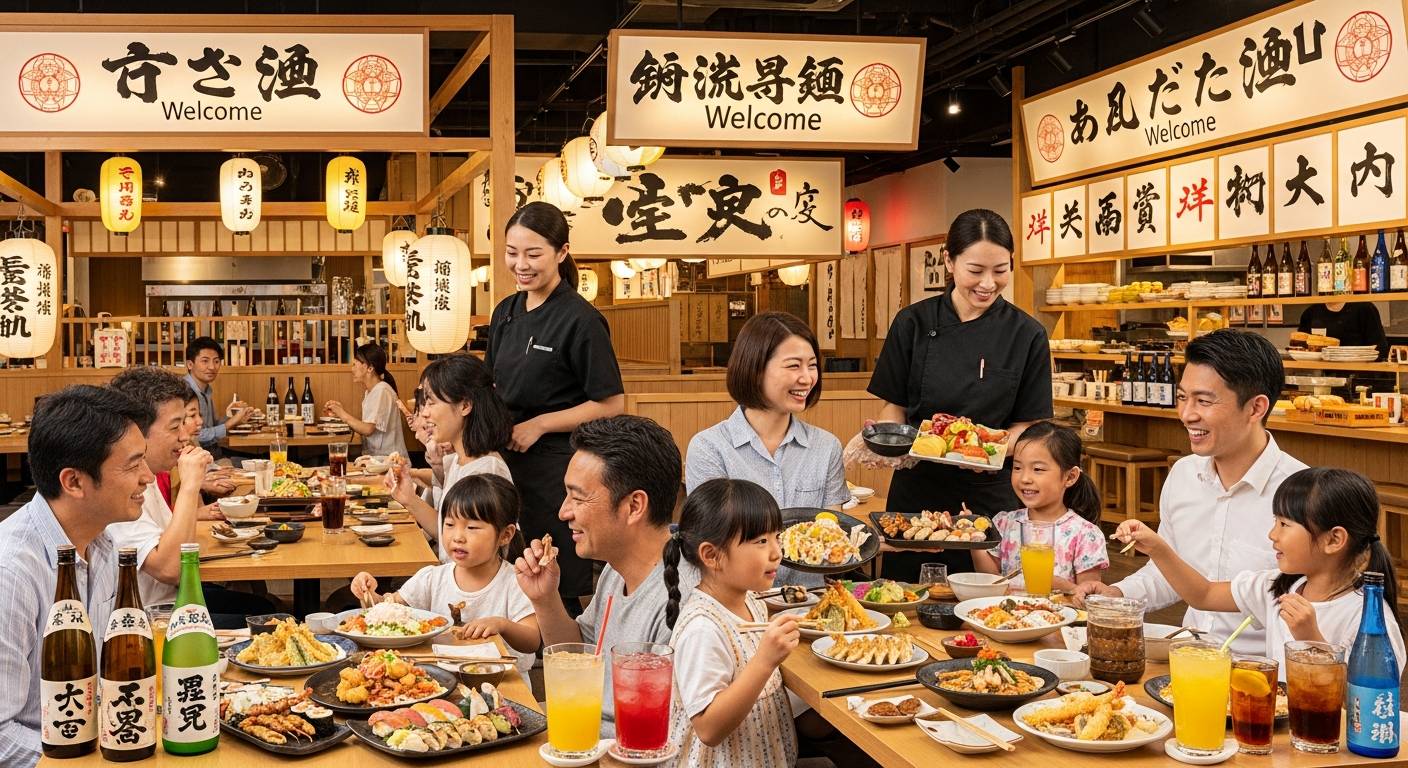
Are you curious about experiencing authentic Japanese dining culture with your entire family? Traditionally, izakaya establishments have been perceived as adult-only venues, primarily serving alcoholic beverages alongside small plates. However, a remarkable transformation is occurring across Japan’s culinary landscape. Family-friendly izakaya venues are emerging, welcoming guests of all ages to experience the rich tapestry of Japanese cuisine and hospitality.
In this comprehensive guide, we’ll explore how izakaya dining is evolving to embrace families while maintaining its cultural essence. From specially crafted menus catering to younger palates to thoughtfully designed spaces that accommodate multi-generational groups, these innovative establishments are redefining what it means to enjoy Japanese izakaya culture.
Whether you’re planning a trip to Japan with children or simply interested in how traditional dining concepts are adapting to modern family needs, this article will provide valuable insights into this exciting culinary trend. Join us as we delve into the world of family-friendly izakaya and discover how these welcoming spaces are creating memorable dining experiences for guests of all ages.
1. Tradition Meets Modernity: How Family-Friendly IZAKAYA is Transforming Japanese Dining Culture
The izakaya, Japan’s traditional after-work drinking establishment, is undergoing a revolutionary transformation. Once the domain of salarymen unwinding after long office hours, these Japanese pubs are now opening their doors to a demographic they rarely catered to before: families with children. This shift represents more than just a business pivot—it symbolizes a fundamental change in Japanese dining culture and social norms.
Historically, izakayas were smoky, boisterous environments where business colleagues gathered to drink and eat small plates of food. The atmosphere was decidedly adult-oriented, with late operating hours and menus focused on alcohol pairings. However, forward-thinking izakaya owners have recognized the untapped market potential in family dining experiences that maintain authentic Japanese tavern elements while accommodating younger guests.
Take Chimney, a popular izakaya chain that has successfully implemented family zones in select locations. These areas feature lower tables with standard seating instead of traditional floor cushions, making dining more comfortable for elderly patrons and children alike. Their menu now includes colorful, non-alcoholic beverages presented in exciting glassware that mimics the adult drinking experience for children.
Another pioneer in this movement is Watami, which has introduced “Family Watami” locations featuring expanded food options that appeal to younger palates while educating children about traditional Japanese flavors. Their interactive menu items allow children to participate in food preparation, such as DIY onigiri (rice ball) stations.
This evolution addresses several societal shifts in Japan: working parents seeking quality family time, growing interest in culinary experiences among younger generations, and tourism demand for authentic yet accessible Japanese dining experiences. The family-friendly izakaya concept successfully bridges tradition and modernity, preserving cultural dining customs while adapting to contemporary family needs.
Architectural modifications have been essential to this transformation. Many establishments now incorporate partial partitions rather than traditional open seating arrangements, allowing families privacy while maintaining the convivial izakaya atmosphere. Ventilation improvements have reduced smoke, creating healthier environments for all patrons. Digital ordering systems with visual menus have made the experience more accessible to children and non-Japanese speakers alike.
This cultural evolution reflects broader changes in Japanese work-life balance priorities and represents a creative solution to the country’s declining birthrate concerns by making public spaces more accommodating to families. The family-friendly izakaya movement demonstrates how traditional institutions can remain culturally relevant by thoughtfully adapting to changing social dynamics without sacrificing their authentic character.
2. Bringing Children to IZAKAYA: A New Wave of Inclusive Culinary Experiences in Japan
Bringing children to an izakaya was once considered taboo in Japanese dining culture. Traditionally, these establishments were smoky, alcohol-focused venues where businessmen unwound after work—hardly suitable environments for young ones. However, a significant cultural shift is occurring across Japan as more izakayas embrace family-friendly policies, creating spaces where culinary traditions can be shared across generations.
This transformation isn’t merely about allowing children through the door—it represents a deeper change in how Japanese dining culture adapts to modern family life. Many forward-thinking izakayas now offer dedicated kids’ menus featuring smaller portions of classics like karaage (fried chicken), edamame, and tamago (egg dishes) that appeal to younger palates while introducing them to authentic Japanese flavors.
Establishments like “Isomaru Suisan” in Tokyo exemplify this trend, with bright, spacious interiors and clearly marked family sections that minimize disruption to other patrons. Their innovative approach includes educational elements—some locations offer simplified explanations of seafood preparation techniques that fascinate children and adults alike.
The practical aspects of family dining haven’t been overlooked either. Progressive izakayas now provide essential amenities including high chairs, diaper-changing facilities, and child-friendly tableware. Some venues like the “Kin no Kura” chain have created partially enclosed booth areas where families can dine comfortably without worrying about disturbing other guests.
Parents are responding enthusiastically to these changes. Many report that family-friendly izakayas offer an invaluable opportunity to maintain social connections while introducing their children to important cultural traditions. The ability to enjoy authentic Japanese cuisine together strengthens family bonds while ensuring culinary heritage continues to the next generation.
This trend extends beyond the major metropolitan areas. In regions like Hokkaido and Kyushu, local izakayas are incorporating family-friendly elements that reflect regional specialties and traditions. These establishments recognize that including younger guests creates loyal customers for years to come.
Timing matters when bringing children to izakayas. Most family-friendly establishments welcome young diners during early evening hours—typically between 5:00 and 7:30 PM—before the late-night crowd arrives. This arrangement allows families to enjoy the authentic izakaya experience while respecting the establishment’s traditional customer base.
The rise of family-friendly izakayas represents more than a business trend—it’s a meaningful evolution in Japanese food culture that bridges generational gaps and preserves culinary traditions for the future. By creating inclusive spaces where families can gather, these establishments are ensuring that the unique social and gastronomic experience of izakaya dining remains relevant and accessible for generations to come.
3. Beyond Adult-Only Spaces: The Rise of Family-Friendly IZAKAYA Establishments
The traditional image of an izakaya as a smoky, adults-only drinking establishment is rapidly evolving across Japan. A new wave of family-friendly izakaya venues is emerging, fundamentally changing how these cultural institutions operate and who they welcome through their doors.
Major chains like Watami and Monteroza (Shirokiya, Uotami) have been at the forefront of this transformation, creating dedicated family sections with specialized menus and amenities for young guests. These spaces often feature child-friendly seating, play areas, and sometimes even dedicated staff to assist families with children.
What makes these family izakayas particularly appealing is their ability to maintain authentic Japanese dining culture while accommodating younger patrons. Many establishments now offer alcohol-free versions of traditional drinks, smaller portion sizes appropriate for children, and flavor profiles adjusted to suit developing palates.
The architectural design of these spaces has evolved significantly as well. Modern family izakayas typically feature improved ventilation systems, separated smoking areas (or completely smoke-free environments), and layouts that allow families some privacy while still enjoying the communal atmosphere that makes izakayas special.
Reservation policies have also become more accommodating, with many establishments now accepting early evening bookings specifically for families. This allows parents to enjoy the izakaya experience during hours when children are still alert but before the venue transitions to its more traditional late-night atmosphere.
Digital innovation plays a role too – many family-friendly izakayas now offer tablet ordering systems with picture menus and games to entertain children while waiting for food. This technological integration helps bridge generational gaps and creates a more inclusive dining experience.
This evolution reflects broader societal changes in Japan, where work-life balance and family time are increasingly valued. The family izakaya concept represents a perfect compromise, allowing parents to participate in an important cultural tradition without sacrificing time with their children.
4. Creating Memories Together: Why Family-Friendly IZAKAYA is the Perfect Dining Choice
The magic of family dining extends beyond simply sharing a meal—it’s about creating lasting memories together. Family-friendly izakaya venues excel at providing the perfect environment for these meaningful moments. Unlike formal restaurants where children might feel restricted, or fast-food establishments that lack cultural depth, modern izakaya strike an ideal balance of entertainment, education, and enjoyment for all family members.
What makes family izakaya particularly special is their interactive dining style. The shared plates concept naturally encourages conversation as family members pass dishes, recommend favorites, and try new flavors together. Children develop adventurous palates while parents appreciate the opportunity to introduce Japanese culinary traditions in an approachable setting. Many establishments like Kichiri and Watami have recognized this appeal, designing their spaces and menus with families specifically in mind.
The communal atmosphere of izakaya dining creates natural opportunities for teaching moments. Parents can demonstrate chopstick techniques, explain different cooking methods, or share stories about Japanese ingredients and traditions. Meanwhile, the lively environment means children’s natural enthusiasm isn’t stifled, allowing families to relax together without the pressure of maintaining perfect restaurant behavior.
Many family-friendly izakaya enhance the experience with special touches—from dedicated kids’ menus featuring playful presentations to activity sheets that keep young diners engaged. Some establishments offer semi-private dining areas where families can enjoy a slightly separated space while still experiencing the vibrant atmosphere. Chains like Doma Doma and Kin no Kura are particularly known for their family-accommodating seating arrangements.
The value proposition is another compelling reason families choose izakaya dining. With varied portion sizes and a wide price range, parents can control the dining budget while still experiencing authentic Japanese cuisine. Set menus designed for family sharing often represent excellent value compared to ordering individual entrées at conventional restaurants.
Perhaps most importantly, family izakaya create neutral ground where different generations connect. Grandparents appreciate the traditional elements, parents enjoy the relaxed atmosphere with drink options, and children delight in the interactive dining experience. This multi-generational appeal makes izakaya the ideal choice for special celebrations or simply strengthening family bonds through regular dining traditions.
As family structures and dining preferences continue to evolve, family-friendly izakaya stand as perfect examples of how traditional institutions can adapt while preserving their cultural essence. The memories created around these tables—trying new foods, sharing laughs, and experiencing Japanese hospitality together—become treasured family stories that last far longer than the meal itself.
5. How IZAKAYA Venues Are Adapting Their Menus and Spaces for All Ages
Traditional izakaya establishments are undergoing remarkable transformations to welcome families through their doors. Once exclusively adult-oriented drinking venues, many izakayas now recognize the value of catering to multiple generations simultaneously. This shift represents not merely a business strategy but a meaningful cultural evolution in Japan’s dining landscape.
Menu innovations stand at the forefront of this family-friendly revolution. Forward-thinking izakayas like Watami and Dohtonbori have introduced specialized children’s menus featuring smaller portions and milder flavors while maintaining authentic Japanese culinary traditions. Many venues now prominently display allergen information and offer customizable dishes to accommodate diverse dietary needs. Non-alcoholic beverage selections have expanded dramatically, with creative mocktails, fresh fruit juices, and specialty teas providing sophisticated alternatives that allow everyone to participate in the communal toasting culture.
The physical transformation of izakaya spaces reflects thoughtful design considerations. Family-friendly establishments often incorporate private dining areas or “koshitsu” where children can be more animated without disturbing other patrons. Restaurants like Yoro No Taki have installed child-safety features such as corner protectors on tables and secure high chairs. Some innovative venues have created designated kids’ zones with age-appropriate entertainment while remaining visible to parents. Ample stroller parking and accessible bathroom facilities with changing tables have become increasingly standard.
Service adaptations complete the family-friendly experience. Staff training now often includes specific guidance on interacting with younger guests, and many establishments provide children’s tableware, bibs, and other practical amenities. Some izakayas have adjusted their hours, opening earlier to accommodate families with young children before traditional dinner times. Reservation systems increasingly allow for specifying children’s needs in advance, ensuring a smoother dining experience.
These adaptations reflect a deeper understanding that preserving cultural traditions sometimes requires flexibility. By welcoming families, izakayas are ensuring their cultural relevance continues for generations while introducing Japanese culinary traditions to younger diners. The most successful family-friendly izakayas maintain their authentic atmosphere while creating inclusive spaces where the entire family can experience this quintessential aspect of Japanese dining culture together.
この記事へのコメントはありません。