

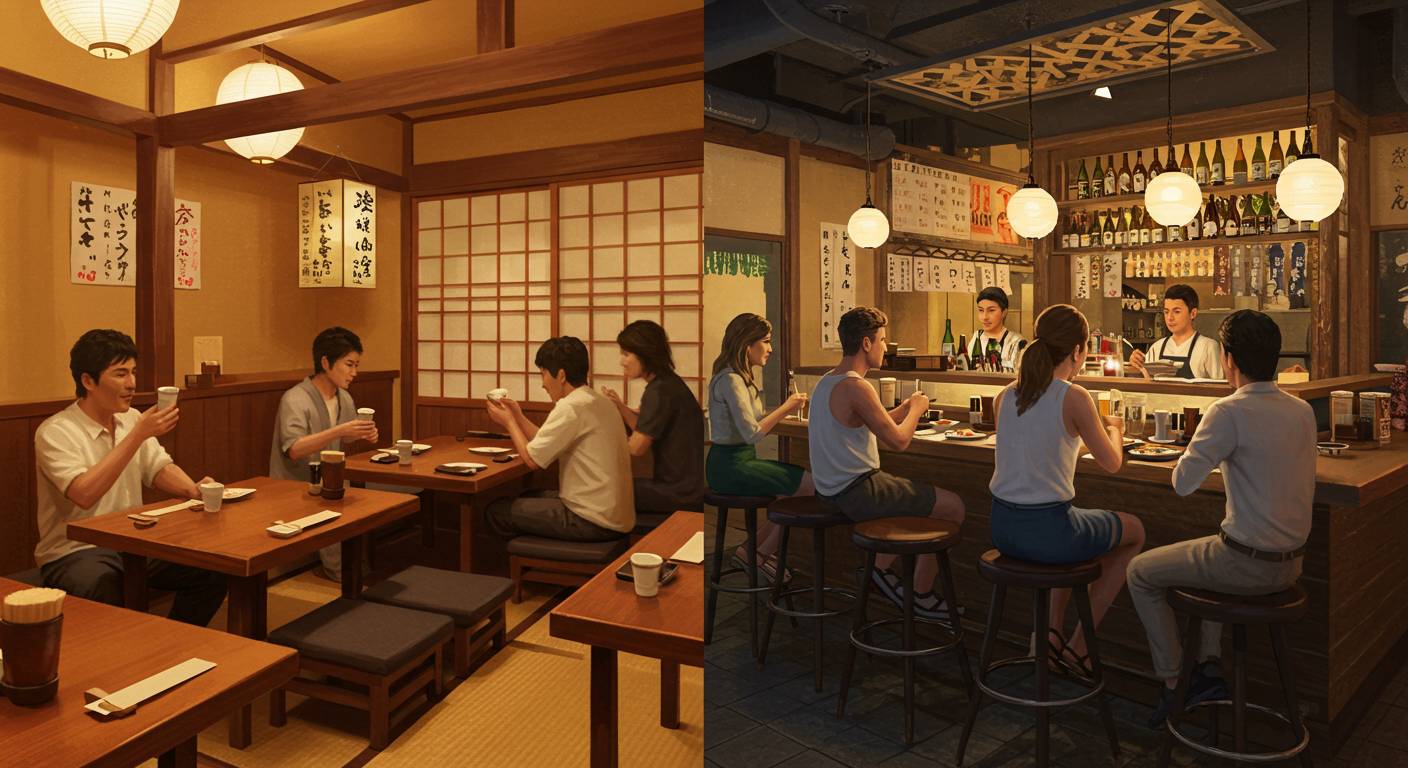
Hey food lovers and Japan enthusiasts! Ever wondered how Japanese izakaya culture has transformed over the years? If you’re planning a trip to Japan or just curious about authentic Japanese dining experiences, understanding the evolution of izakaya is essential to appreciating this cornerstone of Japanese social life.
Izakaya—those cozy Japanese pubs where food and drinks flow freely—have been bringing people together for centuries. But the izakaya of today looks quite different from its traditional roots. From the intimate, smoky establishments of old Tokyo to the sleek, Instagram-worthy spots popping up in modern neighborhoods, the transformation is fascinating.
As someone who’s spent countless evenings exploring both traditional hole-in-the-wall joints and trendy new concepts, I’m excited to take you through this journey of culinary evolution. Whether you’re a yakitori aficionado looking to expand your knowledge or a first-timer planning your Japanese food adventure, this guide will help you navigate both worlds with confidence.
Ready to discover what makes each izakaya experience unique? Let’s dive into the differences, traditions, must-try dishes, and unwritten rules that shape Japan’s beloved dining institution!
1. Top 10 Differences Between Traditional and Modern IZAKAYA Experience
The Japanese izakaya has evolved dramatically over the decades, transforming from traditional drinking establishments to contemporary social hubs. Whether you’re planning your first visit to Japan or simply curious about authentic Japanese dining culture, understanding these key differences will enhance your experience. Here are the top 10 differences between traditional and modern izakaya that showcase this fascinating evolution.
First, the atmosphere sets them apart instantly. Traditional izakayas embrace minimalist aesthetics with wooden interiors, tatami seating, and subdued lighting creating an intimate environment. Modern izakayas, like the popular chain Torikizoku, opt for brighter spaces with contemporary design elements, often featuring open kitchens and stylish bar counters.
Second, seating arrangements differ significantly. In traditional establishments such as Gonpachi in Tokyo (famously featured in Kill Bill), you’ll typically find low tables with floor cushions or tatami rooms. Modern venues like Uotami provide Western-style chairs and tables, high stools at counters, and sometimes even private booths with entertainment systems.
Third, menu presentation has transformed. Traditional izakayas offer handwritten menus, often exclusively in Japanese with seasonal specials. Modern counterparts like Watami present digital menus with multiple languages, QR code ordering systems, and extensive photo displays of each dish.
Fourth, the clientele demographics have shifted. Traditional izakayas primarily cater to businessmen and locals, while modern establishments like Shirokiya welcome diverse crowds including tourists, students, and younger professionals seeking casual social spaces.
Fifth, service styles contrast notably. Traditional venues maintain formal Japanese hospitality with attentive staff and ceremonial serving rituals. Modern izakayas have adopted more casual service approaches, sometimes with self-service elements and buzzer systems for ordering.
Sixth, price structures vary widely. Traditional establishments often use otōshi (compulsory appetizers) and omakase (chef’s selection) pricing models. Modern chains like Torikizoku popularized the affordable fixed-price model where most items cost the same amount.
Seventh, food preparation methods differ. Traditional izakayas emphasize authentic cooking techniques passed down through generations. Modern versions incorporate fusion elements, international influences, and contemporary cooking methods.
Eighth, drink selections have expanded dramatically. While sake and shochu dominate traditional menus, modern izakayas like Hibiki offer extensive craft beer selections, imported wines, and creative cocktails with Japanese-inspired twists.
Ninth, operating hours reflect changing lifestyles. Traditional establishments typically close earlier, while modern izakayas often extend service until early morning, catering to late-night dining culture.
Finally, technological integration marks a clear distinction. Traditional venues maintain minimal technology, preserving authentic experiences. Modern izakayas embrace digital ordering systems, entertainment options, and social media integration to enhance customer engagement.
Both traditional establishments like Yamariki Honkan in Shinbashi and modern venues like The Lock in Shibuya offer authentic yet distinctly different Japanese dining experiences. Understanding these differences helps visitors appreciate the rich evolution of izakaya culture while finding the perfect spot to match their preferences.
2. How IZAKAYA Culture Has Transformed: A Journey Through Time
The izakaya culture in Japan has undergone a remarkable transformation over centuries, evolving from humble sake shops to sophisticated dining establishments that play a central role in Japanese social life. Originally appearing during the Edo period (1603-1868), izakayas began as simple liquor stores where customers could sit and drink. These early establishments, known as “sakaya,” primarily served sake accompanied by small dishes designed to complement the alcohol.
As Japan entered the Meiji era (1868-1912) and opened to Western influence, izakayas began incorporating new ingredients and cooking techniques. The menu expanded beyond traditional Japanese fare to include dishes inspired by Chinese and Western cuisines. This period marked the first major evolution of the izakaya concept, transforming it from merely a place to drink to a genuine dining destination.
The post-war economic boom of the 1950s and 1960s saw another significant shift. As Japan’s salary workers sought places to unwind after long workdays, izakayas became the go-to destination for after-work socializing. Chain izakayas emerged during this period, offering standardized menus and reasonable prices that appealed to the growing middle class. Establishments like Watami and Shoya began expanding nationwide, creating a new category of accessible dining.
The bubble economy of the 1980s introduced luxury elements to izakayas, with premium ingredients and elegant interiors becoming more common. Some izakayas began specializing in regional cuisines or particular ingredients, such as Hokkaido seafood or Kyushu chicken. This specialization trend continues today, with many establishments focusing on craft beer, premium sake, or specific cooking styles like robatayaki (fireside cooking).
The most recent evolution has been the emergence of modern izakayas that specifically cater to international tastes while maintaining Japanese authenticity. These establishments offer English menus, accommodate dietary restrictions, and present dishes in Instagram-friendly ways while preserving the convivial atmosphere that has always been central to izakaya culture. Restaurants like Gonpachi (made famous by “Kill Bill”) and Ippudo’s izakaya concept exemplify this global-minded approach.
Technology has also transformed the izakaya experience, with tablet ordering systems, online reservations, and even robot servers in some ultra-modern establishments. Yet despite these innovations, the core essence of izakaya—a place where food and drink facilitate social connection—remains unchanged after centuries of evolution. This remarkable ability to adapt while maintaining cultural identity explains why izakayas continue to thrive in contemporary Japan and increasingly around the world.
3. Must-Try Dishes in Both Traditional and Modern Japanese IZAKAYA
Whether you’re visiting a century-old izakaya in Kyoto or a sleek contemporary establishment in Tokyo’s Roppongi district, certain dishes have become essential to the izakaya experience. These culinary treasures reflect Japan’s rich food culture and provide insight into how traditional flavors are being preserved or reimagined in modern settings.
In traditional izakaya, Yakitori (grilled chicken skewers) remains the undisputed champion. From the tender, juicy negima (chicken with green onion) to the more adventurous heart, liver, and skin varieties, these charcoal-grilled delicacies capture the essence of Japanese simplicity. Oden, a winter favorite consisting of various ingredients simmered in dashi broth, offers comfort in its most authentic form. The time-honored preparation at establishments like Otafuku in Asakusa allows diners to experience flavors that have remained unchanged for generations.
Modern izakaya establishments haven’t abandoned these classics but have introduced creative twists. At trendy spots like Tatemichiya in Shimokitazawa, traditional yakitori might be paired with unconventional sauces or international ingredients. The beloved karaage (Japanese fried chicken) might appear with Korean-inspired gochujang dipping sauce or truffle salt at places like Gonpachi SG, known for its innovative approach.
Sashimi and seafood offerings highlight another interesting contrast. Traditional izakaya like Isomaru Suisan serve pristine slices of fresh fish with minimal adornment, while contemporary establishments such as Kichiri might present carpaccio-style arrangements with yuzu-infused olive oil or microgreens.
The izakaya staple of edamame (boiled soybeans) demonstrates this evolution perfectly. Traditional venues serve them simply salted, while modern izakaya might offer them tossed with truffle oil, garlic chips, or spicy shichimi pepper.
Regardless of the setting, certain dishes transcend the traditional-modern divide. Tamagoyaki (Japanese omelet), agedashi tofu (fried tofu in dashi), and gyoza (dumplings) appear on menus across the spectrum, though execution and presentation may vary significantly.
What makes the izakaya experience special is not just the individual dishes but how they complement each other and the beverages served. Both traditional and modern establishments understand this harmony, creating culinary journeys that satisfy diverse palates while honoring the essential spirit of Japanese dining culture.
4. The Ultimate Guide to IZAKAYA Etiquette: Then and Now
Navigating izakaya etiquette can be intimidating for first-timers, but understanding the evolution from traditional to modern practices will enhance your dining experience. In traditional izakayas, removing shoes before entering tatami rooms remains customary, while modern establishments often feature Western-style seating without this requirement.
The time-honored “otoshi” or “tsukidashi” – a small appetizer served with your first drink – continues in both settings as a cover charge equivalent. While once considered impolite to pour your own drink, today’s izakayas embrace a more relaxed approach, though pouring for others before yourself still demonstrates respect.
Ordering practices have transformed significantly. Traditional izakayas expect courses to be ordered gradually throughout the evening, starting with lighter fare and progressing to heartier dishes. Modern venues accommodate concurrent ordering, though experienced diners still appreciate the traditional progression from sashimi to grilled items to rice or noodle dishes.
At established izakayas like Shinsuke in Tokyo’s Yushima district, calling “sumimasen” (excuse me) remains the proper way to summon staff, while chain operations like Torikizoku now provide tableside call buttons. Payment methods have similarly evolved – traditional spots often accept only cash with bill-splitting difficulties, while contemporary izakayas routinely offer card payments and individual billing options.
Perhaps the most significant shift concerns noise levels. Traditional etiquette demanded moderate volume, especially in high-end establishments. Modern izakayas, particularly those targeting younger clientele, embrace a livelier atmosphere where animated conversation forms part of the experience. Regardless of setting, respecting fellow diners through reasonable behavior transcends all izakaya generations.
5. Why Modern IZAKAYA Are Attracting Young People While Preserving Tradition
Modern izakaya establishments have mastered the delicate balance between honoring Japanese culinary traditions and appealing to younger generations. Their success lies in creating environments that feel both fresh and respectfully connected to cultural roots. Unlike their traditional counterparts, contemporary izakaya venues incorporate design elements that resonate with Instagram-savvy patrons—think minimalist interiors, statement lighting, and artistic food presentation that practically begs to be photographed.
The menu evolution has been equally strategic. While preserving iconic dishes like yakitori and sashimi, modern izakaya have introduced fusion elements that intrigue younger diners. Establishments like Gonpachi in Tokyo (famously featured in Kill Bill) maintain traditional wooden interiors but serve innovative dishes like truffle edamame alongside classics. Similarly, Zuma, with locations across major global cities, has successfully reinterpreted izakaya dining through contemporary presentation while maintaining authentic flavors.
Technology integration has further bridged the generation gap. Many modern izakaya now offer digital menus with detailed explanations and origin stories of dishes, appealing to young consumers who value authenticity and transparency. Some venues like Robata JINYA have even incorporated QR code systems that provide information about ingredients and cooking methods, creating educational experiences alongside dining ones.
The shifting social experience is perhaps most significant. Traditional izakaya can sometimes feel intimidating to newcomers with their unwritten rules and customs. Modern venues have created more accessible environments with bilingual staff, explanation cards, and a generally more relaxed approach to dining etiquette. This accessibility doesn’t dilute tradition but rather makes it more approachable for younger generations who might otherwise miss experiencing this important aspect of Japanese culture.
The beverage program has evolved dramatically as well. While sake and beer remain staples, craft cocktails incorporating Japanese ingredients like yuzu, shiso, and sakura have become signature offerings at places like Gen Yamamoto in Tokyo. This evolution acknowledges changing taste preferences while introducing traditional Japanese flavors through contemporary vehicles.
この記事へのコメントはありません。