

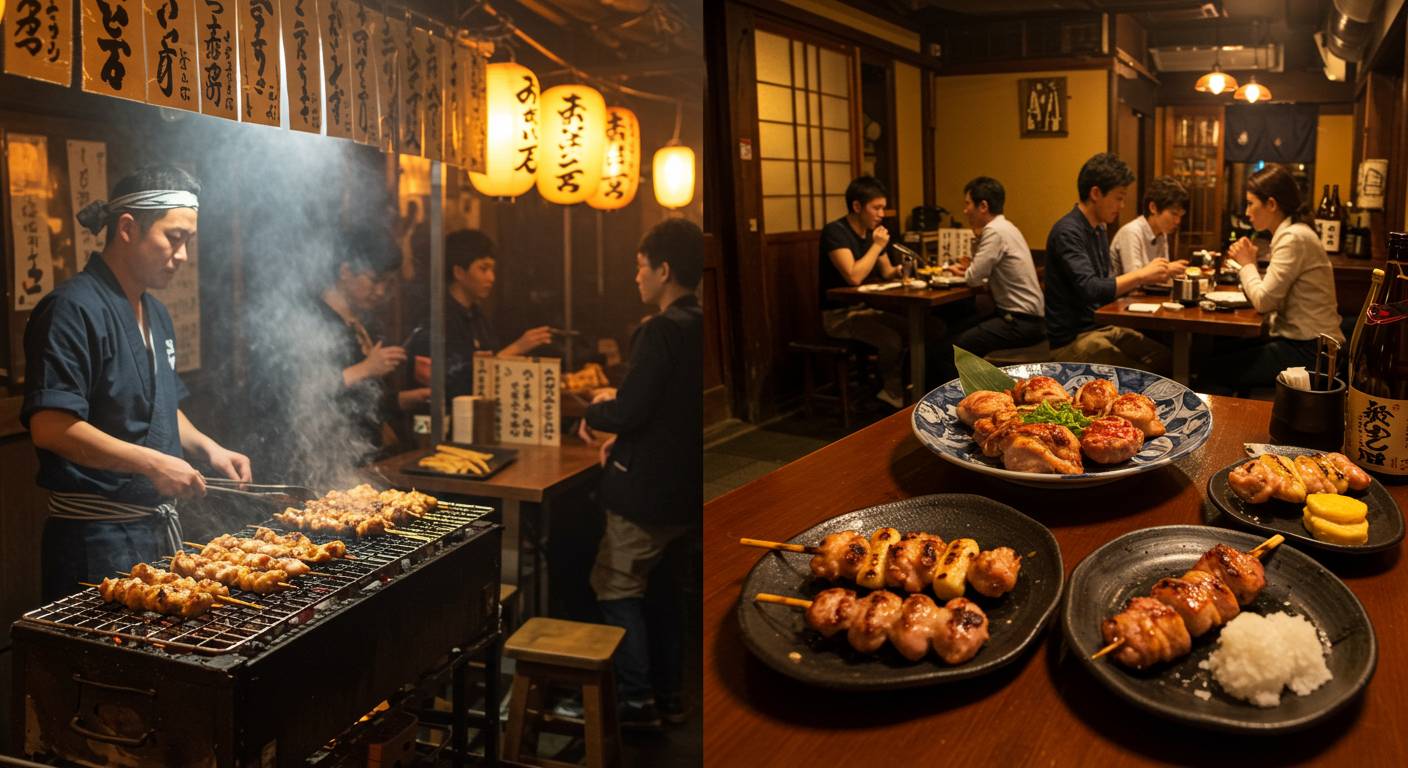
Are you curious about how simple skewered chicken transformed into a globally respected culinary art? Welcome to the fascinating world of yakitori, where tradition meets innovation on the end of a bamboo skewer!
As someone who’s spent countless evenings exploring the smoky, savory universe of Japanese yakitori and izakaya culture, I’m thrilled to share this journey with you. From humble street food origins to elegant fine dining experiences, yakitori has undergone an incredible evolution that reflects Japan’s rich culinary heritage.
Did you know that master yakitori chefs train for years just to perfect the art of grilling different parts of the chicken? Or that authentic izakaya establishments are considered cultural institutions where business deals, friendships, and even marriages have been formed over shared plates and drinks?
Whether you’re planning your next trip to Japan, looking for authentic yakitori in your city, or simply fascinated by Japanese food culture, this comprehensive guide will take you through the smoke-filled, flavor-packed world of yakitori and izakaya. You’ll discover expert techniques, cultural significance, and why food enthusiasts worldwide are increasingly drawn to this seemingly simple but deeply complex culinary tradition.
Join me as we explore the charcoal-scented path from street corners to Michelin stars, and uncover what makes yakitori one of Japan’s most beloved food traditions!
1. The Ultimate Guide to YAKITORI: From Street Corners to Michelin Stars
Yakitori, those irresistible skewers of grilled chicken, represent one of Japan’s most beloved culinary traditions. What began centuries ago as humble street food has transformed into a sophisticated cuisine celebrated in upscale restaurants worldwide, including those with coveted Michelin stars.
The essence of yakitori lies in its beautiful simplicity: bite-sized pieces of chicken threaded onto bamboo skewers and grilled over binchotan charcoal. Traditional yakitori masters waste nothing, crafting delicacies from every part of the bird—from the tender thigh (momo) and juicy breast (sasami) to more adventurous options like heart (hatsu), liver (rebā), and crispy skin (kawa).
The secret to exceptional yakitori lies in three elements: premium ingredients, precise grilling technique, and the tare sauce. This sweet-savory glaze, often guarded as a family secret, is typically made from soy sauce, mirin, sake, and sugar, simmered and reduced to perfection. Alternatively, some connoisseurs prefer their skewers with just a touch of salt (shio), allowing the chicken’s natural flavors to shine.
In Tokyo’s Ebisu district, Toritama exemplifies the elevation of yakitori to fine dining status. With over 30 different chicken parts available, their master chefs demonstrate the incredible depth of this seemingly simple cuisine. Meanwhile, Torisawa in Meguro has earned international acclaim for its perfectly executed classics, while Torishiki in Shinagawa proudly displays its Michelin star, serving yakitori with unparalleled finesse.
The experience of eating yakitori has evolved as well. While street vendors and casual standing bars still offer delicious, affordable options, high-end yakitori restaurants now provide omakase experiences where chefs serve course after course of their finest creations, often paired with premium sake or craft beer.
What makes yakitori’s journey remarkable is that despite its ascension to fine dining, it remains accessible. From 300-yen skewers at neighborhood izakayas to 20,000-yen tasting menus at exclusive counters, yakitori bridges culinary worlds while maintaining its soul—proving that sometimes, the most exceptional culinary experiences come from the most fundamental cooking techniques.
2. How IZAKAYA Culture Transformed Global Dining Scenes
The concept of izakaya—Japan’s beloved casual pubs where drinking meets dining—has quietly revolutionized restaurant scenes worldwide over the past decade. What was once a distinctly Japanese experience has transcended cultural boundaries to become one of the most influential dining formats globally.
Izakaya’s appeal lies in its democratic approach to dining. Unlike traditional restaurants with rigid course structures, izakayas encourage sharing small plates (otsumami) while enjoying drinks in a relaxed atmosphere. This format has proven irresistible to international diners seeking more social, less formal dining experiences.
In metropolitan cities like New York, London, and Sydney, izakaya-inspired establishments have proliferated, often blending traditional Japanese elements with local influences. Notable examples include Zuma, with locations across major cities worldwide, and New York’s celebrated Sakagura, both of which have introduced Western audiences to authentic izakaya experiences while adapting to local tastes.
The izakaya influence extends beyond Japanese-specific venues. The “small plates” concept has been widely adopted across diverse cuisines, with tapas bars, mezze restaurants, and American “shareables” menus all reflecting izakaya’s communal dining philosophy. Even high-end establishments have incorporated izakaya elements, creating more casual sister restaurants or bar areas featuring snack-style menus.
Beverage programs have also been transformed by izakaya culture. The Japanese approach to cocktail craftsmanship—emphasizing precision, quality ingredients, and presentation—has elevated bar standards globally. Sake and shochu, once obscure outside Japan, have become staples in cosmopolitan beverage programs, with dedicated sommeliers guiding customers through these complex categories.
The izakaya aesthetic has similarly influenced restaurant design worldwide. The warm wood elements, intimate lighting, and counter seating arrangements typical of traditional izakayas now appear in dining establishments across diverse cuisines, creating spaces that balance conviviality with comfort.
Perhaps most significantly, izakaya culture has helped shift dining expectations. The rigid formality once associated with quality dining has given way to a more relaxed approach where exceptional food and drink can be enjoyed in comfortable, accessible environments. This democratization of fine dining owes much to the izakaya philosophy that great culinary experiences should be available to everyone, not just on special occasions.
As global diners continue seeking authentic yet approachable dining experiences, the izakaya influence seems likely to endure, reminding us that sometimes the most profound cultural exchanges happen not in formal settings but over shared plates and raised glasses.
3. Secret Techniques of YAKITORI Masters You Need to Know
Behind every perfectly grilled yakitori skewer lies a world of technique that true masters have refined over decades of dedicated practice. These secrets aren’t commonly shared outside professional kitchens, but understanding them can transform your appreciation of this Japanese culinary art form.
The first secret lies in the binchotan charcoal. This isn’t merely a fuel source – it’s the soul of yakitori. Premium binchotan, used by establishments like Torishiki in Tokyo, burns at precisely 900°C with minimal smoke, allowing the pure essence of the chicken to shine through. The charcoal’s consistent heat creates the perfect sear while maintaining moisture within each morsel.
Next comes the tare sauce technique. Master yakitori chefs maintain what’s known as “taremoto” – a mother sauce that’s continually replenished and develops complexity over years or even generations. At Torishin in New York, their tare has been nurtured for over a decade, absorbing flavors from countless skewers dipped into it after grilling.
The skewering method itself contains hidden wisdom. The spacing between meat pieces matters tremendously – approximately 3mm ensures proper heat circulation. Different parts require different techniques: thigh meat is folded in specific patterns, while skin must be stretched perfectly taut to achieve that signature crispness found at renowned yakitori spots like Bird Land in Ginza.
Temperature control represents perhaps the most difficult mastery. Yakitori isn’t simply cooked over flames; it dances between zones of varying heat. The best chefs, like Yoshiteru Ikegawa of Torishiki, can judge by sight and touch exactly when to move skewers between positions, sometimes adjusting height by mere millimeters to perfect the cooking process.
Finally, there’s the mystical “timing of the turn” – knowing precisely when to rotate each skewer. This isn’t measured by timers but through intuition developed over thousands of repetitions. The legendary Chef Yamamoto of Birdland explains it as “listening to the chicken” – a sixth sense that tells him exactly when each turn should happen.
These techniques might seem subtle, but they’re the difference between good yakitori and transcendent yakitori. Next time you sit at the counter watching a master at work, you’ll recognize these secret techniques unfolding before your eyes, elevating humble chicken skewers into one of the world’s great culinary experiences.
4. YAKITORI and IZAKAYA: A Journey Through Japan’s Most Beloved Food Tradition
Japanese food culture extends far beyond sushi and ramen, with yakitori and izakaya representing some of the most authentic culinary experiences the country has to offer. These traditional dining concepts have evolved from humble beginnings to become global phenomena, captivating food enthusiasts worldwide.
Yakitori, literally meaning “grilled chicken,” consists of skewered chicken pieces cooked over charcoal. Originally a street food dating back to the Meiji era, yakitori vendors would set up small stalls near train stations, offering affordable bites to commuters. What began as a practical way to use every part of the chicken—from thigh meat (momo) to skin (kawa) and even cartilage (nankotsu)—has transformed into a sophisticated culinary art form.
Today, yakitori spans the spectrum from casual standing bars to Michelin-starred establishments like Torisawa in Tokyo, where master chefs perfect the delicate balance of smoke, salt, and umami. The preparation process remains deceptively simple: premium chicken pieces are threaded onto bamboo skewers, seasoned with either salt (shio) or a sweet-savory soy-based sauce (tare), and grilled with precision over binchotan charcoal.
Izakaya, meanwhile, represents Japan’s answer to the gastropub—casual drinking establishments where food is designed to complement alcohol rather than take center stage. The word combines “i” (to stay) and “sakaya” (sake shop), reflecting their evolution from simple liquor stores where patrons could sample drinks to full-fledged dining establishments.
The izakaya experience is characterized by its relaxed atmosphere, shared plates, and diverse menu selections. Traditional izakayas like Shinsuke in Tokyo maintain century-old traditions, serving classics such as edamame, karaage (fried chicken), grilled fish, and of course, yakitori. The modern izakaya scene has expanded to incorporate global influences, with establishments like Tori-Kizoku in Osaka blending traditional techniques with contemporary presentations.
What makes both yakitori and izakaya culture particularly special is their emphasis on conviviality. Unlike formal dining, these experiences encourage interaction, whether between friends sharing skewers or between chefs and customers across an open grill. This social aspect has made them particularly appealing to international audiences seeking authentic Japanese experiences.
In major cities worldwide—from New York’s Nonono to London’s Jidori—yakitori and izakaya concepts have been embraced and adapted, sometimes maintaining strict authenticity and other times incorporating local ingredients and preferences. This global expansion has introduced millions to the nuanced flavors and convivial dining style that Japanese people have treasured for generations.
For travelers to Japan, experiencing yakitori and izakaya remains an essential cultural touchstone, offering insights into everyday Japanese life that more formal dining experiences cannot provide. The sizzle of skewers on the grill, the calls of “irasshaimase” (welcome) as you enter, and the ritualistic pouring of drinks create an immersive sensory experience that embodies the essence of Japanese hospitality.
5. Why Food Critics Are Obsessed With Authentic YAKITORI Experiences
Food critics across the globe have fallen under the spell of authentic yakitori experiences, and for good reason. This seemingly simple Japanese dish—skewered chicken grilled over binchotan charcoal—has become a benchmark by which culinary experts measure the depth of Japanese cuisine.
What drives this obsession begins with the deceptive simplicity of yakitori. While appearing straightforward, mastering yakitori requires years of dedicated practice. Critics value the precision in temperature control that top yakitori chefs demonstrate, ensuring each skewer achieves the perfect balance between juicy tenderness and caramelized exterior. At establishments like Torishin in New York or Bird Land in Tokyo, critics observe how chefs maintain ideal distances between skewers and charcoal, adjusting constantly throughout cooking—a discipline that reveals true craftsmanship.
The ingredient-forward philosophy of yakitori particularly resonates with modern food criticism. Top yakitori restaurants like Toritama in Tokyo exemplify this approach by utilizing nearly every part of the chicken—from the familiar breast and thigh to more specialized cuts like the knee cartilage (hiza nankotsu) and tail (bonjiri). Critics appreciate how this nose-to-tail approach honors the ingredient while demonstrating culinary creativity.
The theatrical element of counter seating adds another dimension to the critical appeal. At Torishiki in Tokyo, critics can observe Chef Yoshiteru Ikegawa’s methodical movements, the rhythmic fanning of charcoal, and the precise timing of each turn. This immersive experience transforms dining into performance art—something increasingly valued in critical circles.
Perhaps most significantly, yakitori represents a historical narrative that food writers can explore. The evolution from street food to refined dining provides rich context for reviews. Critics examining establishments like Jidori in London or Yakitori Totto in New York can analyze how these restaurants balance tradition with contemporary dining expectations.
The simple seasonings—typically just salt or tare (a sweet-savory sauce)—create a transparency that nowhere to hide imperfection, making yakitori a true test of skill that critics can easily evaluate. This combination of technical challenge, cultural significance, and sensory experience explains why yakitori has become a fixation among discerning food critics seeking authenticity in an increasingly homogenized culinary landscape.
この記事へのコメントはありません。