

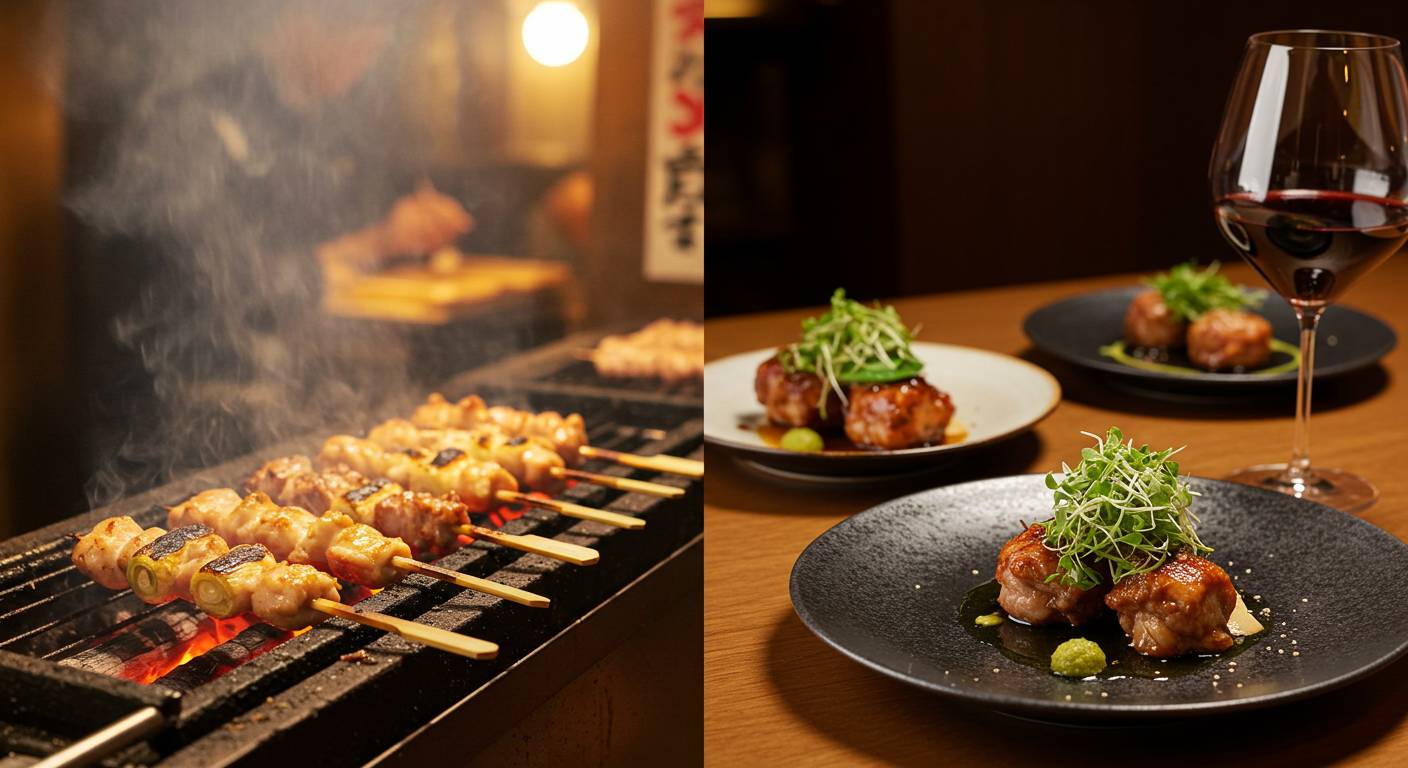
Hey foodies! Ever wondered how a simple skewered chicken could transform from a humble street snack to the star of high-end restaurants worldwide? YAKITORI has made this incredible journey, and I’m here to take you along for the ride!
When I first tasted authentic yakitori in a small alley in Tokyo, the explosion of flavors completely changed my understanding of what grilled chicken could be. From the perfectly charred skin to the tender, juicy meat infused with that unmistakable smoky aroma – it was a revelation that led me down a rabbit hole of culinary exploration.
In this post, I’ll share everything I’ve learned about this Japanese culinary treasure – from its street food origins to its elevation in fine dining establishments globally. Whether you’re a yakitori newbie or a seasoned fan looking to deepen your appreciation, you’ll find something to satisfy your curiosity (and appetite!).
The best part? These delicious skewers are more accessible than ever, with places like Daigo Takumi bringing authentic yakitori experiences to food lovers everywhere. So grab a drink (sake pairs wonderfully!), get comfortable, and let’s dive into the sizzling world of yakitori together!
1. From Tokyo Streets to Your Plate: Discover the Magic of YAKITORI
Yakitori, Japan’s beloved skewered chicken, represents the perfect balance between humble street food and sophisticated culinary artistry. Walking through Tokyo’s bustling streets, the unmistakable aroma of chicken grilling over binchotan charcoal draws you toward small yakitori stalls where Japanese salarymen unwind after long workdays. Each skewer tells a story of Japanese culinary tradition that dates back centuries.
What makes yakitori truly special is its deceptive simplicity. At its core, yakitori consists of bite-sized pieces of chicken threaded onto bamboo skewers and grilled with precision. Traditional yakitori embraces the nose-to-tail philosophy, utilizing every part of the chicken – from the tender breast (sasami) to the richly flavored thigh (momo), crispy skin (kawa), and even more adventurous cuts like heart (hatsu) and liver (reba).
The magic happens in the seasoning. Classic yakitori offers two primary flavor profiles: shio (salt) and tare (a sweet-savory soy-based glaze). The shio allows the natural flavor of premium chicken to shine through, while tare creates a caramelized exterior that balances sweetness and umami. Master chefs spend years perfecting their tare recipes, often keeping them closely guarded secrets passed through generations.
Today, yakitori has transcended its street food origins to appear on menus of Michelin-starred restaurants like Torisawa in Tokyo and Tori Shin in New York. These establishments elevate the humble skewer through ingredient sourcing, precise cooking techniques, and artistic presentation. Yet the soul of yakitori remains the same whether enjoyed from a street vendor or at a fine dining counter – it’s about honoring simplicity, celebrating every part of the chicken, and creating community around shared food.
2. Top 10 Ways to Enjoy YAKITORI – Secrets from Japanese Chefs
Japanese chefs have perfected yakitori through centuries of tradition, developing techniques that elevate this seemingly simple skewered chicken dish to culinary artistry. Here are the top 10 expert-approved ways to enjoy authentic yakitori, straight from masters who have dedicated their lives to this craft.
1. Shio-style Simplicity: Many Japanese chefs insist that high-quality chicken seasoned with nothing but sea salt reveals the purest expression of yakitori. At Torishin in New York, Chef Atsushi Kono applies precisely the right amount of artisanal sea salt to allow the natural flavors to shine.
2. Tare Mastery: The sweet-savory tare sauce, typically made from soy sauce, mirin, sake, and sugar, requires perfect balance. Chef Yoshiteru Ikegawa of Torishiki in Tokyo reduces his signature tare for days, layering complexity with each batch.
3. Binchotan Charcoal Cooking: Elite yakitori establishments like Bird Land in Ginza exclusively use binchotan, a premium white charcoal that burns at consistent high temperatures with minimal smoke, preserving the chicken’s delicate flavors.
4. Strategic Temperature Control: Michelin-starred yakitoriya Toriki’s Chef Kentaro Nakahara employs different grilling zones – placing fatty cuts like chicken skin further from direct heat to render fat slowly while exposing leaner cuts to higher temperatures.
5. Offal Appreciation: Adventurous eaters should embrace parts like liver (reba), heart (hatsu), and knee cartilage (nankotsu). At Toritama in Tokyo, their menu features over 30 different chicken parts, each requiring specific preparation techniques.
6. Pairing with Beer: The classic Japanese pairing is with cold draft beer, particularly Sapporo or Asahi. The effervescence cleanses the palate between bites of different skewers.
7. Sake Experimentation: Junmai sake with its rich umami notes complements the charcoal-grilled flavors. Chef Masahiko Teshima of Kushikatsu Tanaka suggests specific regional sakes depending on whether you’re enjoying salt or tare-based yakitori.
8. Strategic Ordering: Japanese chefs recommend starting with subtle white meat cuts like sasami (breast) before progressing to stronger-flavored dark meat and finally to more intensely flavored offal cuts.
9. Omakase Experience: At premium establishments like Torishiki or Birdland, the chef’s omakase course delivers skewers in a precise progression that builds flavors throughout the meal, often concluding with a chicken soup made from the bones.
10. Seasonal Accompaniments: Master chefs pair yakitori with seasonal vegetables like shishito peppers in summer or grilled Japanese leeks in winter. Chef Hideki Matsumoto of Toriyoshi serves his chicken thigh skewers with house-pickled daikon that changes with the seasons.
Japanese chefs emphasize that authentic yakitori isn’t just food—it’s a dining philosophy that honors every part of the chicken through meticulous preparation and respect for ingredients. Whether enjoyed at a humble street stall or a Michelin-starred counter, these techniques transform simple skewered chicken into a profound culinary experience.
3. Why YAKITORI Is Taking Over Global Food Scenes in 2023
3. Why YAKITORI Is Taking Over Global Food Scenes
The global food scene is experiencing a remarkable transformation with Japanese yakitori emerging as a culinary powerhouse. This simple yet sophisticated skewered chicken preparation has transcended its humble street food origins to claim prestigious spots on fine dining menus worldwide. The momentum behind yakitori’s popularity stems from several compelling factors driving its international appeal.
First, yakitori perfectly aligns with contemporary dining preferences. The small-plate, shareable format satisfies the modern diner’s desire for variety and social eating experiences. Its portion flexibility makes it ideal for both quick bites and extended tasting menus, appealing to casual diners and gastronomic enthusiasts alike.
Sustainability considerations have also boosted yakitori’s profile. Traditional yakitori celebrates the whole-animal approach, utilizing every part of the chicken from the prized thigh and breast to less conventional cuts like heart, liver, and cartilage. This nose-to-tail philosophy resonates strongly with environmentally conscious diners and chefs seeking to minimize food waste.
The technical precision in yakitori preparation has captured the attention of culinary professionals globally. Master chefs like Yoshiteru Ikegawa of Torishiki in Tokyo have elevated yakitori craftsmanship to an art form, inspiring international chefs such as Zack Sklar of Bistro 82 and David Chang of Momofuku to incorporate yakitori techniques into their repertoires. The deceptive simplicity of yakitori—requiring expert temperature control, precise timing, and intimate knowledge of ingredients—offers chefs a compelling creative challenge.
Health-conscious diners appreciate yakitori’s lean protein profile and straightforward preparation. The cooking method allows the natural flavors of quality ingredients to shine without excessive fats or complex sauces, aligning perfectly with clean eating trends while delivering satisfying umami flavors.
The accessibility of yakitori has proven crucial to its global spread. Unlike some Japanese culinary traditions requiring specialized equipment or rare ingredients, yakitori’s fundamentals—quality chicken, salt, sauce, and fire—are universally available. This has enabled authentic yakitori experiences to flourish in food scenes from New York to London, Melbourne to Berlin.
International restaurateurs have recognized yakitori’s business advantages too. The high-turnover, focused menu concept allows for operational efficiency while maintaining quality. Establishments like Yakitori Totto in New York and Bincho Yakitori in London demonstrate how specialized yakitori concepts can achieve both critical acclaim and commercial success.
As global palates continue evolving toward nuanced flavors and mindful consumption, yakitori’s star will likely rise further. Its balance of tradition and innovation, simplicity and sophistication positions it perfectly for continued growth in the international culinary landscape.
4. The Ultimate Guide to YAKITORI: Flavors That Will Blow Your Mind
Delving into the world of yakitori reveals an astonishing spectrum of flavors that extends far beyond simple grilled chicken. This Japanese culinary art form has perfected the balance between simplicity and complexity, offering taste experiences that truly captivate the palate. The secret lies in the meticulous preparation and specialized techniques passed down through generations of dedicated chefs.
At its core, yakitori’s flavor profile depends on three critical elements: the quality of chicken, the grilling technique, and the seasoning approach. Premium yakitori establishments like Torishin in New York or Torishiki in Tokyo source organic, free-range birds, understanding that the foundation of exceptional yakitori begins with exceptional ingredients.
The seasoning dichotomy of yakitori presents two distinct paths: shio (salt) and tare (sauce). Shio yakitori showcases the natural flavors of the chicken with nothing more than high-quality sea salt, allowing the true character of each cut to shine. Tare, a sweet-savory sauce typically crafted from soy sauce, mirin, sake, and sugar, creates a caramelized exterior that delivers complex umami with hints of sweetness.
The most mind-blowing aspect of yakitori is the specialized cuts rarely experienced in Western cuisine. Kawa (crispy skin) delivers an incredible textural contrast between crackling exterior and rendered fat. Nankotsu (cartilage) provides an addictive crunch with subtle chicken flavor. Perhaps most surprising to newcomers is the buttery, rich experience of liver yakitori when properly prepared—a revelation even for those who typically avoid organ meats.
Master yakitori chefs understand that different cuts require different grilling techniques. The precisely controlled heat of binchotan charcoal creates the perfect environment for cooking each skewer to its ideal doneness. This attention to detail transforms humble chicken parts into transcendent culinary experiences that can rival the most sophisticated fine dining establishments in the world.
5. YAKITORI 101: How This Simple Skewer Became a Gourmet Sensation
Yakitori, literally translated as “grilled chicken,” has transcended its humble street food origins to become a celebrated element in high-end gastronomy worldwide. This Japanese culinary art form centers around skewered chicken pieces grilled over binchotan charcoal, creating a perfect balance of smoky flavor and tender meat that has captivated food enthusiasts across cultures.
The foundation of yakitori lies in its simplicity and respect for ingredients. Traditionally, yakitori chefs utilize every part of the chicken—from the familiar breast and thigh to more specialized cuts like the heart (hatsu), skin (kawa), and cartilage (nankotsu). This nose-to-tail approach emerged from necessity in post-war Japan when resources were scarce, but has evolved into a sophisticated culinary philosophy celebrating sustainability and craftsmanship.
What distinguishes authentic yakitori is the meticulous attention to detail. Master yakitori chefs train for years to perfect the precise temperature control needed to cook different chicken parts to their ideal doneness. The selection of binchotan charcoal is crucial, as this traditional Japanese charcoal burns at a steady high temperature with minimal smoke, allowing the natural flavors of the chicken to shine.
The seasoning philosophy follows two main approaches: shio (salt) and tare (a sweet-savory glaze of soy sauce, mirin, sake, and sugar). The simplicity of these seasonings belies their complexity—the best yakitori establishments craft house-made tare sauces that have been continuously used and replenished for decades, developing deep umami profiles impossible to replicate.
In recent years, yakitori has experienced a global renaissance as international chefs recognize its potential. Michelin-starred establishments like Torishin in New York and Bird Land in Tokyo have elevated yakitori to fine dining status. These restaurants combine traditional techniques with premium ingredients—using heritage-breed chickens, organic vegetables, and artistic presentation to transform the humble skewer into a luxury experience.
The versatility of yakitori has also contributed to its rising popularity. Beyond chicken, modern yakitori includes pork (butabara), beef (gyutan), and seasonal vegetables like shishito peppers and mushrooms. This adaptability allows yakitori to fit perfectly within contemporary dining trends emphasizing small plates, shared dining experiences, and appreciation for craft.
For culinary enthusiasts, the art of yakitori represents the Japanese concept of shokunin—the dedication to mastering a craft through years of disciplined practice. Each skewer tells a story of tradition, technique, and the pursuit of perfection in simplicity.
この記事へのコメントはありません。