

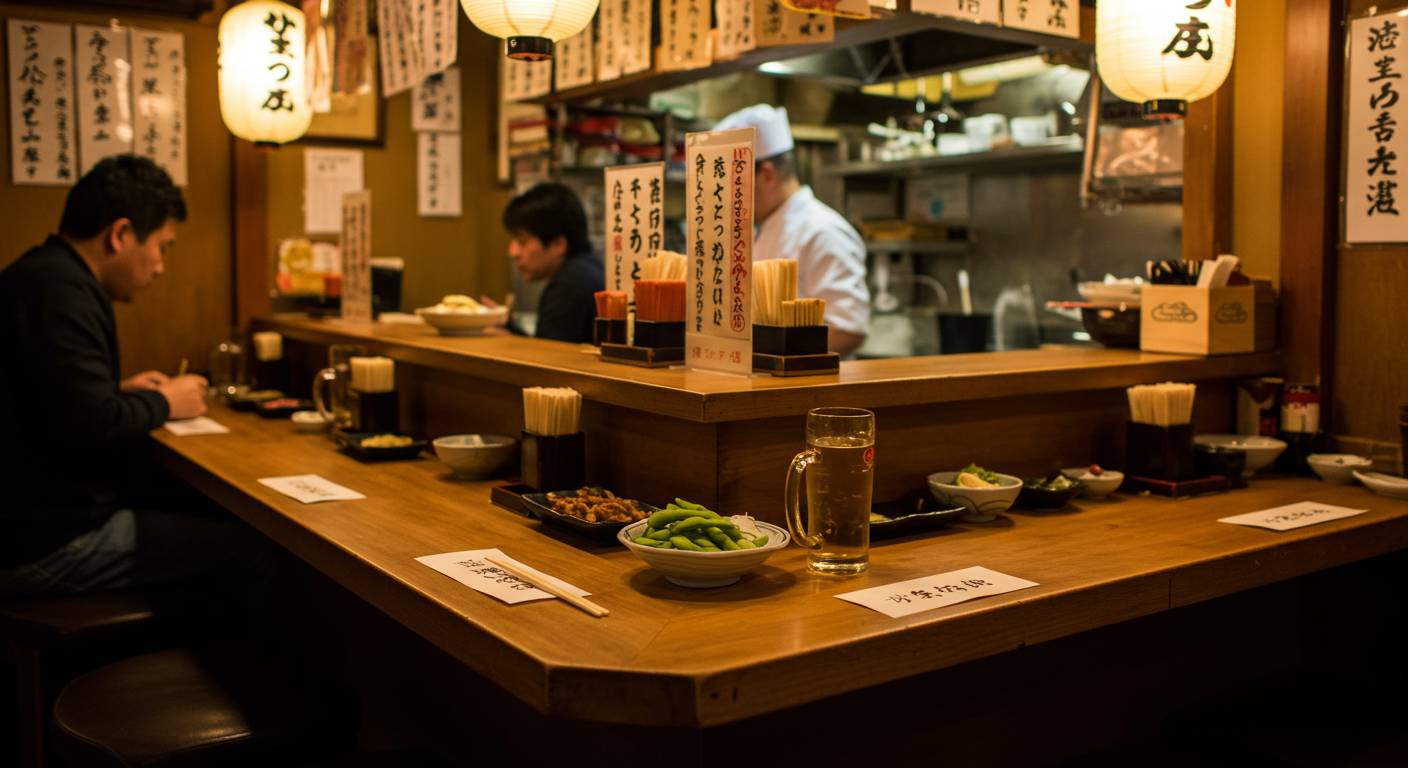
Ever found yourself wandering the neon-lit streets of Tokyo, stomach growling, but too intimidated to step into one of those cozy-looking izakayas? You’re not alone! As someone who’s navigated the delicious world of Japanese drinking establishments both with friends and flying solo, I’m here to tell you that izakayas might just be the perfect spot for the independent traveler.
There’s something magical about perching at a counter in a traditional yakitori joint, watching skilled chefs grill skewers over binchotan charcoal while you sip on an ice-cold beer or highball. The sizzling sounds, mouthwatering aromas, and lively atmosphere create an experience that goes far beyond just having dinner.
In this guide, I’ll walk you through everything from deciphering those kanji-filled menus to understanding when it’s appropriate to say “kanpai!” Whether you’re planning your first trip to Japan or you’re a seasoned traveler looking to dive deeper into authentic food culture, these insider tips will help you embrace izakaya dining with confidence—even when you’re traveling solo.
Ready to discover why izakayas are the hidden gem in every solo traveler’s Japan itinerary? Let’s dive in!
1. How to Navigate Izakaya Menus Without Looking Like a Tourist
Walking into an izakaya alone can be intimidating, especially when faced with a menu filled with unfamiliar Japanese characters and no pictures to guide you. But fear not – mastering the izakaya menu is your first step to an authentic Japanese dining experience. Most traditional izakayas organize their menus by preparation method rather than ingredients. Look for sections labeled “焼き物” (yakimono/grilled items), “刺身” (sashimi/raw fish), “揚げ物” (agemono/fried dishes), and “お酒” (osake/alcohol).
When in doubt, these phrases will help you order like a local: “Osusume wa nan desu ka?” (What do you recommend?) or “Teiban menu wa?” (What are your standard items?). Many izakayas have a “nama biiru” (draft beer) or “highball” to start, followed by an “otoshi” – a small appetizer that doubles as a seating charge.
For solo travelers, sitting at the counter is ideal. Not only will you have a front-row seat to watch the chefs work their magic, but you’ll also find it easier to order small portions. Look for “一人前” (ichininmae) indicating a single serving. Don’t hesitate to point at what others are eating if it looks good – this is perfectly acceptable and often leads to discovering local specialties.
Digital tools can be lifesavers – apps like Google Translate’s camera function can instantly translate menus. However, embracing the unknown is part of the izakaya experience. Order the “omakase” (chef’s selection) for a curated taste of the establishment’s best offerings without the menu anxiety. Remember, izakayas are about leisurely dining, so order a few dishes at a time rather than everything at once. This approach not only keeps food fresh but also lets you adjust your order based on your hunger level – a strategy that seasoned izakaya-goers employ regardless of their Japanese proficiency.
2. Drinking Alone in Japan: Why Izakayas Are Perfect for Solo Travelers
Traveling solo in Japan doesn’t mean you have to miss out on the country’s vibrant food and drink culture. In fact, izakayas—Japanese gastropubs—are uniquely suited for solo adventurers seeking authentic culinary experiences without the awkwardness that sometimes accompanies dining alone in other countries.
Unlike many Western establishments where solo diners might feel out of place, izakayas have embraced the concept of “hitori-nomi” (solo drinking) for generations. Many feature counter seating specifically designed for individual guests, allowing you to watch the chefs prepare your food while engaging in casual conversation with staff or fellow patrons if desired.
The typical izakaya layout offers multiple seating options perfect for solo travelers. Counter seats provide front-row views of food preparation, while small tables tucked into corners offer privacy. Some modern establishments like Hitorizakaya in Tokyo and Hitori in Osaka exclusively cater to solo diners, removing any potential social stigma entirely.
What makes izakayas particularly appealing is their tapas-style menu. Rather than committing to a large, single-portion meal, you can order several small plates to sample diverse flavors without waste or overwhelming portions. Many izakayas offer “ippin” (single-serving) options specifically portioned for individual diners.
The relaxed pace of izakaya dining also suits solo travelers. Unlike restaurants where table turnover is important, izakayas encourage patrons to linger—nursing a drink while sampling dishes at your own pace creates a comfortable atmosphere for reading, journaling, or simply observing local life.
Technology has further enhanced the solo izakaya experience. Many establishments now feature tablet ordering systems with English options, eliminating potential language barriers. Some even offer solo-friendly specials during off-peak hours, providing excellent value for budget-conscious travelers.
Beyond food and drink, izakayas serve as cultural gateways. Observing local drinking etiquette—from the ceremonial “kanpai” (cheers) to pouring drinks for others—provides insight into Japanese social customs. Staff often appreciate curious foreign visitors and may share recommendations or cultural insights if you express interest.
For safety-conscious solo travelers, izakayas represent a secure environment to enjoy evening activities. Their typically bright lighting, food-focused atmosphere, and professional staff create spaces where women and other vulnerable travelers can comfortably enjoy nightlife without many of the concerns associated with traditional bars.
Next time you find yourself traveling alone in Japan, don’t hesitate to push open the noren curtains of an izakaya. You’ll discover that dining solo here isn’t just accepted—it’s embraced as part of the cultural fabric, offering an authentic window into Japanese life that group travelers might never fully experience.
3. 5 Must-Try Dishes at Traditional Izakayas (That Aren’t Sushi)
While Japan’s sushi often steals the international spotlight, traditional izakayas offer a treasure trove of equally impressive culinary delights. For solo travelers venturing into these cozy Japanese pubs, here are five exceptional dishes to order that showcase authentic izakaya cuisine beyond the familiar sushi rolls.
First on your must-try list should be Yakitori – skewered chicken pieces grilled over charcoal. The beauty lies in its variety; from juicy thigh meat (momo) to crispy skin (kawa) and even tender heart (hatsu). At established spots like Torikizoku or Torishiki in Tokyo, each skewer arrives perfectly charred with a light tare sauce or simple salt seasoning that enhances the smoky flavor.
Next, experience Agedashi Tofu – silken tofu cubes lightly dusted with potato starch, deep-fried until golden, and served in a savory dashi broth topped with grated daikon, green onions, and bonito flakes. The contrasting textures – crispy exterior giving way to custard-soft interior – create an unforgettable mouthfeel that pairs wonderfully with cold beer.
No izakaya adventure is complete without trying Karaage – Japan’s superior take on fried chicken. Marinated in ginger, garlic, soy sauce, and often sake before being double-fried, these juicy morsels develop an incredibly crisp coating while remaining tender inside. Many izakayas serve it with a lemon wedge and mayonnaise, creating a flavor combination that keeps locals coming back night after night.
For seafood lovers, Saba Shioyaki (salt-grilled mackerel) offers the perfect introduction to Japan’s fish preparation mastery. The mackerel is simply salted and grilled until the skin crisps while the flesh remains succulent. This minimalist approach highlights the natural flavors of the fish, demonstrating why Japanese cuisine is celebrated for its respect for ingredients.
Finally, don’t miss Okonomiyaki, often described as a Japanese savory pancake. This regional specialty (particularly beloved in Osaka and Hiroshima) combines cabbage, meat or seafood, and various condiments into a filling comfort dish. Watching the chef prepare it on a teppan grill before topping it with dancing bonito flakes, sweet-savory sauce, and Japanese mayonnaise is part of the experience.
These five dishes represent just the beginning of izakaya culinary exploration, but they provide solo travelers with confident ordering options that will impress even local patrons. Each offers a window into Japanese flavor profiles, cooking techniques, and cultural values around food sharing that define the izakaya experience.
4. The Unwritten Rules of Izakaya Etiquette Every Solo Traveler Should Know
Navigating izakaya culture as a solo traveler requires understanding certain unspoken rules that can make or break your experience. First and foremost, most izakayas will serve an “otoshi” or “tsukidashi” – a small appetizer that functions as a seating charge. Don’t refuse it or ask for it to be removed from your bill; it’s a standard practice across Japan.
When entering an izakaya, you’ll often hear staff shout “irasshaimase!” – a welcome greeting that doesn’t require a response. Simply acknowledge with a nod and wait to be seated. As a solo diner, you’ll likely be offered a counter seat, which is perfect for observing food preparation and perhaps striking up conversations.
Ordering etiquette is crucial. Many izakayas operate on a “nomi-hodai” (all-you-can-drink) or “tabe-hodai” (all-you-can-eat) system with time limits. Pace yourself accordingly. When ordering, start with drinks followed by small dishes that can be shared if you later meet fellow travelers. Popular izakayas like Torikizoku or Isomaru Suisan are excellent starting points for solo travelers.
Drinking customs deserve special attention. Never pour your own drink first – wait for others to pour for you, then reciprocate. Even alone, you might find locals offering to pour for you. If this happens, hold your glass with two hands as a sign of respect.
Regarding payment, most establishments don’t split bills, which actually benefits solo travelers. However, tipping is not expected and can even cause confusion. When ready to leave, call “sumimasen” (excuse me) and make a cross with your fingers to signal for the bill.
Finally, the noise level at izakayas is typically high, so don’t worry about being quiet. This actually creates a comfortable atmosphere for solo diners, as you can blend in without feeling conspicuous while enjoying authentic Japanese dining culture at your own pace.
5. From Yakitori to Highballs: A Solo Explorer’s Journey Through Tokyo’s Hidden Izakayas
Navigating Tokyo’s izakaya scene alone might seem intimidating, but it offers one of the most authentic glimpses into Japanese drinking culture. Armed with nothing but curiosity and an empty stomach, I ventured into the labyrinthine alleyways of Shinjuku’s Memory Lane (Omoide Yokocho) where dozens of tiny izakayas emit enticing aromas of charcoal-grilled chicken.
At Torikizoku, a popular chain perfect for solo diners, I discovered the beauty of simplicity through perfectly skewered yakitori. Each bite of juicy chicken, whether it was the tender thigh (momo) or the rich, fatty skin (kawa), paired harmoniously with a cold Sapporo beer. The counter seating arrangement naturally facilitated conversations with locals who eagerly recommended their favorite skewers.
For a more upscale experience, Toritama in Ebisu specializes in rare chicken parts you won’t find elsewhere. As a solo traveler, I appreciated the detailed English menu and the staff’s willingness to explain each unique offering. Their chicken heart (hatsu) skewer, lightly seasoned with salt, converted me into an offal enthusiast.
Moving from beer to spirits, Golden Gai’s warren of tiny bars became my evening playground. At Albatross, barely large enough for eight patrons, I sipped a perfectly crafted whisky highball while the bartender taught me the art of proper Japanese drinking etiquette. The intimate setting meant conversations flowed naturally between strangers, resulting in impromptu Tokyo recommendations from locals.
For late-night cravings, 24-hour Isomaru Suisan in Shibuya became my sanctuary. Their seafood izakaya concept allowed me to point at fresh catches displayed at the entrance. The grilled mackerel (saba) paired unexpectedly well with their yuzu sour cocktail, creating a flavor combination I still attempt to recreate at home.
Solo exploration of Tokyo’s izakaya culture offers something uniquely valuable: the opportunity to move at your own pace, engage directly with locals, and follow your culinary instincts without compromise. The counter-seating culture prevalent in these establishments makes dining alone not just acceptable but ideal for cultural immersion. With each skewer and highball, I discovered that sometimes the most authentic experiences happen when you venture out alone.
この記事へのコメントはありません。