

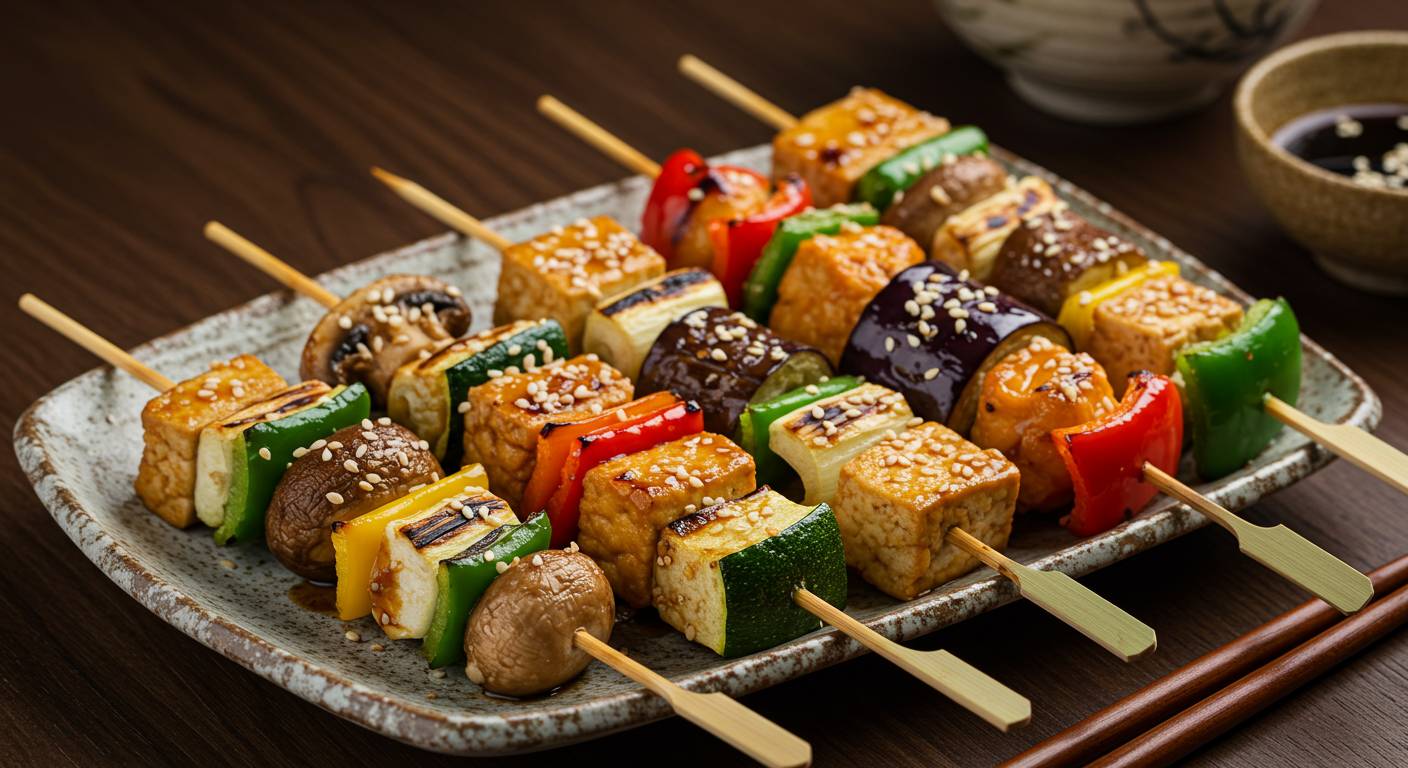
Hey there, food enthusiasts! Are you craving the smoky, savory goodness of Japanese yakitori but following a plant-based lifestyle? You’re in the right place! While traditional yakitori is known for its grilled chicken skewers, the vegetarian version offers an incredible explosion of flavors that might just surprise you.
I recently discovered some mind-blowing vegetarian yakitori options that completely changed my perspective on this classic Japanese dish. The beautiful thing about plant-based yakitori is how it maintains that authentic charcoal-grilled essence while showcasing the natural flavors of vegetables, tofu, and mushrooms.
Whether you’re a committed vegetarian, experimenting with meat-free Mondays, or simply curious about expanding your culinary horizons, these plant-based Japanese skewers deserve a spot on your dining table. The techniques, seasonings, and presentation all honor the traditional yakitori experience while creating something uniquely delicious for plant lovers.
In this guide, I’ll walk you through everything you need to know about vegetarian yakitori – from amazing recipes you can try at home to expert grilling techniques that will elevate your cooking game. Ready to discover how vegetables can be transformed into mouthwatering skewers that might just rival their meaty counterparts? Let’s dive in!
1. Discover Delicious Vegetarian YAKITORI: Your Guide to Plant-Based Japanese Skewers
Yakitori, traditionally known as grilled chicken skewers, has evolved beyond its meat-centric origins to embrace plant-based alternatives that capture the same smoky, umami-rich experience. Vegetarian yakitori offers an exciting entry point into Japanese cuisine for those following plant-based diets. From mushroom skewers that deliver meaty textures to tofu varieties that absorb the signature tare sauce perfectly, these options provide all the satisfaction of traditional yakitori without animal products. Many authentic Japanese restaurants now feature dedicated vegetarian yakitori sections on their menus, recognizing the growing demand for plant-based alternatives. The preparation remains true to tradition – ingredients are carefully skewered and grilled over binchotan charcoal, creating that distinctive charred flavor that yakitori enthusiasts crave. Popular vegetarian yakitori variations include shiitake mushrooms, king oyster mushrooms sliced to resemble scallops, firm tofu, eggplant, green peppers, and even avocado. These plant-based skewers pair perfectly with Japanese beer or sake, creating a complete izakaya experience suitable for all dietary preferences. Whether you’re a committed vegetarian or simply looking to reduce meat consumption, vegetarian yakitori offers a flavorful gateway to experiencing authentic Japanese grilling techniques with plant-based ingredients.
2. 10 Amazing Vegetarian YAKITORI Recipes That Will Blow Your Mind
Plant-based Japanese cuisine is revolutionizing traditional favorites, and vegetarian yakitori is leading the charge. These plant-based skewers capture the essence of traditional yakitori while catering to vegetarian and vegan diets. Here are 10 mind-blowing vegetarian yakitori recipes that will transform your dining experience:
1. King Oyster Mushroom Skewers: Thick-cut king oyster mushrooms brushed with tare sauce create a meaty texture reminiscent of traditional chicken yakitori. The mushrooms absorb the smoky flavor perfectly when grilled.
2. Tofu and Shishito Pepper Alternating Skewers: Firm tofu cubes alternated with mild shishito peppers create a delightful contrast of textures and flavors, especially when glazed with sweet soy tare.
3. Smoked Eggplant Yakitori: Eggplant chunks marinated in miso, sake, and mirin develop a rich umami flavor when grilled, offering a distinctive Japanese taste experience.
4. Shiitake and Green Onion Skewers: Traditional negima yakitori reinvented with shiitake mushrooms replacing chicken, paired with the classic green onion segments.
5. Marinated Tempeh Yakitori: Tempeh cubes soaked in a blend of soy sauce, ginger, and garlic create protein-rich skewers with a distinctively nutty flavor profile.
6. Sweet Potato and Miso Butter Skewers: Partially pre-boiled sweet potato chunks brushed with miso butter deliver a sweet-savory combination that caramelizes beautifully on the grill.
7. Seitan and Leek Skewers: Wheat gluten-based seitan chunks alternated with leek sections offer a protein-packed alternative with authentic texture.
8. Gingko Nut and Shimeji Mushroom Yakitori: This traditional Japanese combination features earthy shimeji mushrooms and the unique flavor of gingko nuts for an authentic experience.
9. Tofu Skin (Yuba) Wrapped Vegetable Skewers: Asparagus or carrot spears wrapped in tofu skin and grilled create a delicate texture contrast that absorbs tare sauce wonderfully.
10. Avocado and Cherry Tomato Yakitori: This modern interpretation features alternating ripe avocado chunks and cherry tomatoes, glazed with a citrus-soy tare for a refreshing twist.
Each of these plant-based yakitori options offers unique flavors while respecting the simplicity and technique of traditional Japanese skewer cuisine. Pair them with a cold Japanese beer or sake for an authentic izakaya experience at home. These vegetarian alternatives are perfect for entertaining guests with dietary restrictions or simply exploring the versatility of Japanese cooking techniques with plant-based ingredients.
3. How to Make Perfect Vegetarian YAKITORI at Home – Expert Tips
Creating restaurant-quality vegetarian yakitori at home is not only possible but also surprisingly straightforward with the right techniques. The secret to perfect plant-based skewers lies in three critical elements: proper ingredient preparation, masterful marinade creation, and precise cooking methods.
First, ingredient selection and preparation are fundamental. For mushroom yakitori, king oyster mushrooms provide an ideal meaty texture – slice them into 1-inch thick rounds to mimic chicken. Tofu should be extra-firm and pressed for at least 30 minutes to remove excess moisture, then cut into consistent 1.5-inch cubes. Vegetables like bell peppers, zucchini, and eggplant should be cut uniformly to ensure even cooking.
The marinade makes or breaks vegetarian yakitori. Traditional tare sauce can be vegetarian-friendly by using kombu dashi instead of bonito. Combine 1/2 cup soy sauce, 1/4 cup mirin, 1/4 cup sake, and 2 tablespoons brown sugar with a 4-inch piece of kombu. Simmer for 10-15 minutes until slightly thickened, then cool completely before using. For deeper flavor penetration, marinate prepared ingredients for at least 2 hours, ideally overnight.
Skewering technique matters significantly. When using bamboo skewers, soak them in water for at least 30 minutes to prevent burning. Thread ingredients with small gaps between pieces to ensure heat circulates properly. For delicate items like tofu, consider using two parallel skewers to prevent rotation during cooking.
The cooking method most closely replicating traditional yakitori requires a charcoal grill or konro grill. However, a gas grill, broiler, or even a grill pan can produce excellent results. The key is high heat (400-450°F) for proper caramelization. Cook skewers 3-4 minutes per side, basting with marinade every 1-2 minutes. Avoid excessive turning, which prevents proper char development.
Master chefs recommend finishing with a double-glazing technique: brush skewers with marinade 30 seconds before removing from heat, then again immediately after. This creates the signature glossy, caramelized finish that distinguishes professional yakitori. Let skewers rest for 2 minutes before serving to allow flavors to settle.
Following these expert tips will transform your homemade vegetarian yakitori from basic grilled vegetables into authentic Japanese cuisine that satisfies even the most discerning palates.
4. The Ultimate Guide to Vegetarian YAKITORI: Flavors Without Meat
Vegetarian yakitori might sound like a contradiction, but plant-based versions of these classic Japanese skewers are revolutionizing traditional izakaya menus across the globe. While authentic yakitori specifically refers to grilled chicken on skewers, the cooking technique and distinctive tare sauce create a flavor profile that translates beautifully to vegetable options.
The secret to exceptional vegetarian yakitori lies in three key elements: ingredient selection, proper skewering technique, and mastering the signature yakitori sauce. For ingredients, firm vegetables with low water content work best—think king oyster mushrooms (with their chicken-like texture when grilled), firm tofu, eggplant, shishito peppers, and lotus root. These vegetables hold their structure over high heat while absorbing the smoky charcoal flavor.
Professional chefs recommend marinating these vegetables before grilling, particularly tofu, which benefits from at least 30 minutes in a mixture of soy sauce, mirin, and rice vinegar. For mushrooms, a light brush of sesame oil before grilling enhances their natural umami qualities.
The tare sauce remains the heart of yakitori’s distinctive flavor. A vegetarian-friendly version combines soy sauce, mirin, sake, brown sugar, and kombu or shiitake dashi instead of the traditional chicken stock. This mixture should be reduced slowly until it reaches a glossy consistency that clings perfectly to the skewered vegetables.
At restaurants like Shizen in San Francisco and Kajitsu in New York, chefs have elevated vegetarian yakitori to an art form. They employ techniques like scoring eggplant in a crosshatch pattern before grilling to maximize sauce absorption, or using compressed tofu that’s been frozen and thawed to create a more meat-like texture.
Temperature control is crucial when grilling vegetarian yakitori. Unlike meat, which can benefit from high heat, vegetables require a more moderate approach—hot enough to achieve caramelization but not so hot that they burn before cooking through. Traditional binchotan charcoal provides the ideal heat source, but a standard grill can work well with proper attention.
For home cooks, pre-soaking bamboo skewers for at least 30 minutes prevents burning, while alternating different vegetables on a single skewer creates balanced flavors and ensures even cooking. The final touch—brushing with tare sauce during the last minute of grilling—creates that signature yakitori glaze without burning the sugars in the sauce.
With proper technique and quality ingredients, vegetarian yakitori offers all the satisfaction of its meat-based counterpart while opening up this beloved Japanese cooking style to everyone at the table.
5. Vegetarian YAKITORI Secrets: Traditional Techniques for Plant-Based Skewers
The magic of vegetarian yakitori lies in honoring traditional Japanese grilling techniques while adapting them for plant-based ingredients. Authentic yakitori chefs have perfected methods over centuries that can transform humble vegetables into exquisite skewered delicacies. The key to exceptional vegetarian yakitori begins with proper skewering technique—ingredients should be threaded onto bamboo skewers with just enough space to allow heat circulation but close enough to maintain moisture. Before grilling, many master chefs soak their vegetables in a light brine solution, enhancing natural flavors while ensuring moisture retention during the cooking process.
Temperature control forms the cornerstone of yakitori excellence. For vegetables like king oyster mushrooms, which mimic the texture of traditional chicken yakitori, chefs maintain a medium-high heat that allows for caramelization without charring. The traditional Japanese binchotan charcoal, prized for its long-burning, consistent heat output, brings out complex flavors in plant-based ingredients that gas grills simply cannot replicate.
The tare (sauce) application technique remains perhaps the most guarded secret among yakitori masters. For vegetarian versions, a carefully balanced mixture of tamari (rather than traditional soy sauce), mirin, sake, and kombu-based dashi creates depth without animal products. The expert approach involves multiple light brushings rather than a single heavy application, allowing layers of flavor to develop gradually during cooking. At Tokyo’s renowned Sora no Niwa restaurant, chefs apply their signature mushroom-infused tare at precisely timed intervals—45 seconds apart—to build a perfect glaze on their famous shiitake skewers.
Proper finishing is equally critical; letting skewers rest briefly after cooking allows flavors to settle and juices to redistribute. Many chefs finish with a light dusting of sansho pepper or yuzu zest, adding aromatic complexity that elevates the entire experience. By respecting these traditional techniques while embracing plant-based ingredients, vegetarian yakitori transcends simple substitution to become a sophisticated culinary art form in its own right.
この記事へのコメントはありません。