

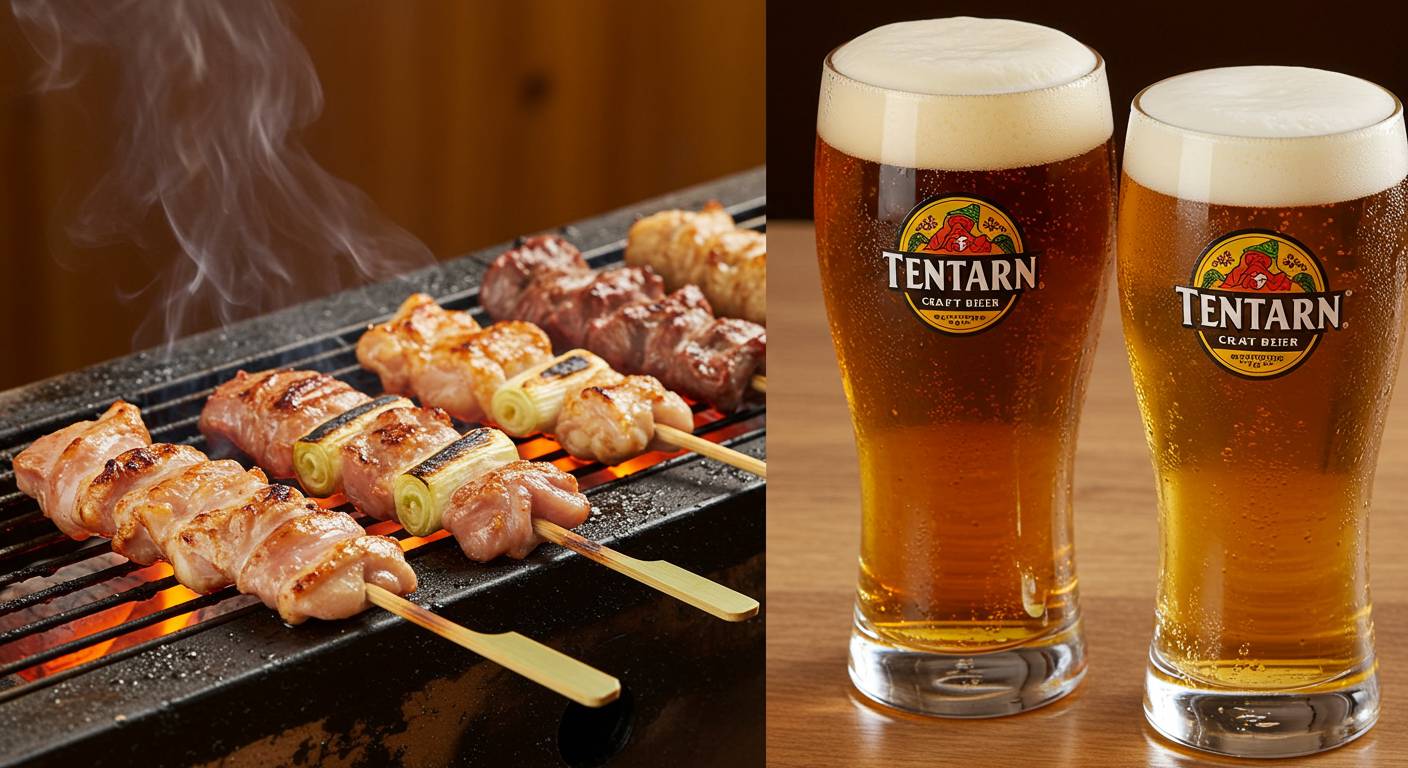
Hey craft beer enthusiasts and YAKITORI lovers! Have you ever experienced that magical moment when the perfect bite of skewered chicken meets just the right sip of craft beer? It’s a flavor explosion that’s taking Japan’s food scene by storm – and for good reason!
I’ve spent countless evenings exploring the smoky, savory world of YAKITORI paired with the complex notes of craft beers, and I’m excited to share everything I’ve learned. Whether you’re planning your next dinner party or just looking to elevate your weekend meal, this guide will transform how you experience these two culinary treasures.
From the subtle sweetness of chicken thigh skewers complemented by a hoppy IPA to the rich umami of liver paired with a robust porter – there’s a perfect match waiting for everyone. And trust me, once you discover these combinations, your taste buds will never be the same!
Join me as we dive into the art of pairing authentic Japanese YAKITORI with craft beers from around the world. Whether you’re a seasoned foodie or new to this delicious duo, you’ll find something to love in this ultimate guide to one of the most satisfying food pairings you’ll ever experience.
1. Discover the Ultimate YAKITORI and Craft Beer Pairings That Will Blow Your Mind
The art of pairing yakitori with craft beer elevates both culinary experiences to extraordinary heights. When the smoky, savory skewers meet the complex profiles of artisanal brews, magic happens on your palate. Let’s explore combinations that seasoned food enthusiasts swear by.
For chicken thigh (momo) yakitori with its juicy richness, an American Pale Ale creates harmony through its hoppy character and citrus notes that cut through the fat. Brooklyn Brewery’s Brooklyn Pale Ale offers the perfect balance of maltiness and bitterness to complement this classic skewer.
When enjoying chicken skin (kawa) with its crispy texture and rendered fat, reach for a Belgian Witbier. The light, wheat-forward profile and subtle spice notes in beers like Hitachino Nest White Ale provide refreshing contrast while enhancing the skin’s savory qualities.
Negima (chicken and green onion) pairs beautifully with German Hefeweizen. The clove and banana esters in Weihenstephaner Hefeweissbier accentuate the charred onion while softening the protein’s umami punch.
For adventurous eaters enjoying liver (reba) skewers, the intensity calls for a robust Porter. The chocolate and coffee notes in Deschutes Black Butte Porter stand up to the mineral-rich organ meat while providing balancing sweetness.
Heart (hatsu) yakitori demands a Saison’s complexity. The farmhouse funk and peppery finish of Dupont Saison Dupont elevate the lean, slightly chewy texture of this delicacy.
For tsukune (chicken meatballs), often glazed with tare sauce, an Amber Ale like New Belgium Fat Tire offers caramel notes that enhance the sweet and savory glaze while maintaining enough bitterness to refresh the palate.
Master these pairings and transform your next yakitori experience from merely satisfying to truly unforgettable. The interplay between craft beer’s artisanal complexity and yakitori’s smoky simplicity creates flavor memories that linger long after the meal ends.
2. Secret Tips: How to Match Your Favorite Craft Beer with Authentic YAKITORI
Finding the perfect craft beer to complement your yakitori experience can elevate your dining pleasure to new heights. The key to mastering these pairings lies in understanding how the flavors interact. For skewers with rich, fatty cuts like chicken thigh (momo), a hoppy IPA creates magic by cutting through the fat while enhancing the charcoal-grilled flavors. The citrus notes in American IPAs from breweries like Sierra Nevada or Ballast Point particularly shine here.
When enjoying delicate white meat skewers such as sasami (chicken tenderloin), opt for lighter wheat beers or Belgian witbiers. Brooklyn Brewery’s Belgian-inspired offerings provide the subtle sweetness and effervescence that won’t overpower these more nuanced cuts. For adventurous eaters who appreciate liver or heart skewers, the maltiness of a good amber ale or Vienna lager creates harmony with these mineral-rich options.
Perhaps the most underrated pairing comes with salt-only seasoned yakitori and a classic Japanese craft lager from Hitachino Nest or Baird Brewing. The clean, crisp profile of these beers allows the pure chicken flavor and smokiness to take center stage. For tare (sweet soy glaze) yakitori, porter or brown ales complement the caramelized sweetness while adding depth through their roasted malt character.
Temperature matters significantly – serve your craft beers properly chilled but not ice-cold to fully appreciate the flavor interplay. Many izakayas in Japan now feature rotating craft taps, with Pigalle in Tokyo and Craft Beer Base in Osaka leading this delicious revolution. Remember that the carbonation in beer serves as a palate cleanser between different skewer varieties, making it the ideal beverage companion for a full yakitori course.
3. The Beer Lover’s Guide to YAKITORI: Flavors That Dance Together
When yakitori meets craft beer, a symphony of flavors unfolds. This pairing isn’t just about eating and drinking—it’s about creating an experience where each enhances the other. Let’s explore how different yakitori styles complement various beer profiles, creating combinations that will elevate your dining experience.
For classic chicken thigh (momo) yakitori with its juicy, savory profile, reach for an amber ale or Vienna lager. These beers offer enough malt backbone to stand up to the rich meat while their subtle sweetness balances the charcoal smokiness. Hitachino Nest Amber Ale works brilliantly here, its caramel notes embracing the umami character of the chicken.
Chicken skin (kawa) skewers, with their crispy texture and fatty richness, call for something with cutting power. IPAs, particularly West Coast styles with pronounced bitterness and citrus notes, slice through the fat while complementing the salt. Try Baird Beer’s Pacific Ale for a match that refreshes the palate between each indulgent bite.
For chicken meatballs (tsukune) brushed with sweet tare sauce, Belgian witbiers offer a perfect counterpoint. The beer’s coriander and orange peel notes enhance the sweetness while the wheat base soothes any charred edges. Coedo Shiro is an excellent Japanese interpretation of this style that pairs wonderfully.
Liver (reba) skewers present an interesting challenge with their mineral-forward intensity. Here, porter or schwarzbier provides a roasty foundation that grounds the metallic notes while adding complementary depth. Yona Yona’s Tokyo Black Porter creates a sophisticated pairing that transforms both components.
Vegetable skewers like shishito peppers or mushrooms find harmony with saison or farmhouse ales. The earthy funk and peppery finish of these beers mirror similar qualities in the vegetables. Far Yeast Brewing’s Tokyo White pairs especially well with shiitake mushrooms, creating an umami explosion.
When enjoying salt-forward yakitori preparations (shio-style), pilsners and helles lagers shine. Their clean, crisp profiles don’t compete with the delicate flavors while their subtle hop bitterness refreshes the palate. Suntory’s Premium Malt’s offers the perfect Japanese interpretation for this classic pairing.
For more adventurous skewers like chicken hearts or gizzards, reach for something equally bold like a Belgian dubbel or scotch ale. These beers’ complex dried fruit notes and caramelized sweetness tame the intensity of these cuts. Minoh Beer’s W-IPA creates a memorable combination that beer enthusiasts will appreciate.
Remember that temperature matters—serve your craft beer properly chilled but not ice-cold to fully appreciate the flavor interplay. The carbonation in beer also acts as a palate cleanser between different yakitori varieties, making it an ideal beverage for this style of dining.
Next time you visit an izakaya like Torikizoku or Bird Land in Tokyo, or even at home with your own yakitori grill, experiment with these pairings. The right beer can transform a good yakitori experience into an unforgettable culinary journey where smoke, salt, umami and craft brewing artistry dance together in perfect harmony.
4. Craft Beer and YAKITORI: Why This Combo Is Taking Over Tokyo’s Food Scene
The marriage of craft beer and yakitori is revolutionizing Tokyo’s culinary landscape, creating a gastronomic trend that appeals to both locals and international visitors. This dynamic duo has transformed traditional yakitori establishments into vibrant hubs where culinary artistry meets brewing excellence.
What makes this pairing so irresistible? The answer lies in the complementary nature of these two crafts. Yakitori—skewered chicken grilled over binchotan charcoal—offers a spectrum of flavors from the simple salt-seasoned sasami (chicken breast) to the rich, umami-packed hearts and livers. Craft beer, with its diverse range of styles from hoppy IPAs to malty stouts, provides the perfect counterpoint to enhance these varied tastes.
At Hitachino Brewing Lab in Akihabara, the fruity notes of their White Ale cut through the fattiness of chicken skin skewers, creating a refreshing balance. Meanwhile, Baird Beer Taproom in Harajuku pairs their robust Rising Sun Pale Ale with tare-glazed thigh meat, the beer’s hoppy bitterness complementing the sweet-savory sauce.
The economic advantage is another driving factor. Craft breweries benefit from showcasing their products in food-centric environments, while yakitori shops attract a broader clientele by offering premium beverages beyond the traditional sake and shochu. Yona Yona Beer Works in Shinjuku exemplifies this synergy, featuring an extensive yakitori menu designed specifically to complement their signature ales.
Social media has amplified this trend, with Instagram-worthy presentations of golden beer glasses alongside perfectly charred skewers becoming a common sight on feeds worldwide. Food influencers regularly highlight spots like Craft Beer Tap in Shibuya, where the carefully curated beer selection is matched with premium free-range yakitori options.
The craft beer and yakitori movement represents more than just a food trend—it’s a cultural phenomenon bridging traditional Japanese cuisine with contemporary global craft beer culture. As Tokyo continues to evolve as a culinary destination, this perfect pairing stands as testimony to how innovation can honor tradition while creating something entirely new and exciting.
5. Impress Your Friends: Expert YAKITORI and Craft Beer Matching Techniques
Elevate your hosting game with these expert yakitori and craft beer pairing techniques that will have your friends talking for weeks. The art of matching specific yakitori skewers with complementary craft beers creates a flavor experience greater than the sum of its parts. Start by considering the intensity spectrum – pair delicate chicken breast (sasami) with light wheat beers or pilsners that won’t overwhelm the subtle flavors. For richer items like chicken thigh (momo) or chicken with scallion (negima), reach for amber ales or session IPAs that can stand up to the smokiness while enhancing the umami.
Temperature contrast is another advanced technique worth mastering. Serve crisp, cold lagers with fatty cuts like chicken skin (kawa) – the refreshing carbonation cuts through richness while the cold temperature provides pleasant counterpoint to hot-off-the-grill skewers. For adventurous eaters enjoying liver (reba) or heart (hatsu), consider Belgian dubbels or brown ales whose malty sweetness balances the mineral-forward flavors.
The sequence of your pairings matters tremendously. Arrange your tasting experience to progress from lighter to stronger flavors – perhaps beginning with simple salt-seasoned tsukune (chicken meatballs) alongside a gentle blonde ale before moving to tare-glazed selections with more robust beers. Keep noteworthy combinations in mind: the caramelized notes in wings (tebasaki) find perfect harmony with coffee-tinged porters, while the smoky char on tail (bonjiri) creates magic alongside rauchbiers or smoked porters.
For a truly memorable experience, prepare pairing note cards for guests explaining why each combination works. This thoughtful touch transforms a casual gathering into an interactive tasting event that showcases your expertise. Remember that contrasting flavors (spicy yakitori with sweet fruit-forward beers) can be just as successful as complementary ones (savory skewers with malty brews). Master these techniques, and you’ll quickly become known as the friend with impeccable food and beverage sensibilities.
この記事へのコメントはありません。