

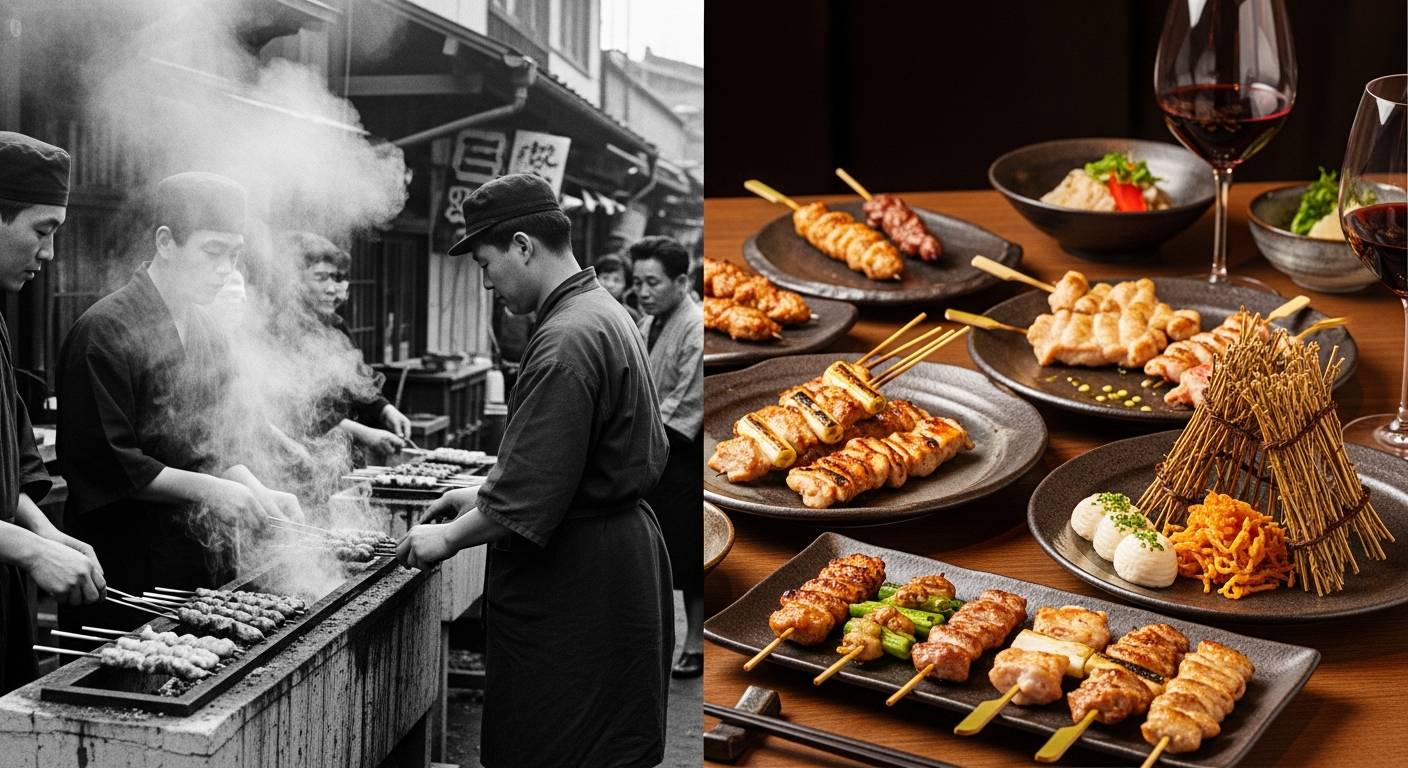
Welcome to our deep dive into the fascinating world of yakitori, one of Japan’s most beloved culinary traditions that has evolved from simple street fare to an internationally recognized art form. As specialists in authentic yakitori preparation, we’re excited to share the rich history and cultural significance of these delectable skewered delights that have captivated food enthusiasts worldwide.
From its humble origins in the bustling streets of Edo-period Japan to its current status as a sophisticated cuisine worthy of Michelin recognition, yakitori represents a perfect harmony of simplicity, technique, and flavor. Our journey through yakitori’s evolution will reveal how skilled artisans have transformed basic ingredients into expressions of culinary excellence, elevating charcoal-grilled chicken skewers to extraordinary heights.
Whether you’re a long-time yakitori enthusiast or new to Japanese cuisine, this exploration will enhance your appreciation for the craftsmanship behind each perfectly grilled skewer. Join us as we trace the remarkable transformation of yakitori through centuries of Japanese history and discover how traditional techniques continue to influence modern gastronomy.
1. The Evolution of YAKITORI: From Humble Street Stalls to World-Class Culinary Art
The story of yakitori is a remarkable journey from simple street food to an internationally recognized culinary art form. This skewered chicken dish, which literally translates to “grilled bird,” has transcended its humble origins to become one of Japan’s most beloved culinary exports.
In ancient Japan, chicken meat was rarely consumed, and it wasn’t until the Meiji era (1868-1912) that eating poultry became more common. The earliest yakitori vendors operated small carts and stalls in entertainment districts, catering to workers and revelers seeking affordable, quick meals. These early iterations focused on using every part of the chicken – from thigh meat to skin, hearts, and gizzards – minimizing waste while maximizing flavor.
Post-World War II, yakitori experienced its first major evolution. As Japan rebuilt and urbanized, dedicated yakitori restaurants began to emerge. These establishments, known as yakitori-ya, offered a more refined setting while maintaining the dish’s accessibility and charm. Salary workers would flock to these smoky venues after long days, sharing skewers and beers in a tradition that continues today.
The true elevation of yakitori to fine dining began in the late 20th century. Master chefs like Yoshiteru Ikegawa of Torishiki and Yoshinobu Saito of Bird Land pioneered a new approach, treating yakitori with the same reverence as other high-end Japanese cuisines. These innovators perfected techniques for skewering, seasoning, and grilling, controlling temperature with scientific precision while honoring traditional methods.
Today’s premium yakitori restaurants often feature counter seating where diners watch as chefs meticulously prepare each skewer over binchotan charcoal. The finest establishments may serve chicken from specially raised breeds like the prized Hinai-jidori, with multi-course omakase menus that can rival the experience of top sushi restaurants in price and prestige.
The global spread of yakitori has further cemented its status. From Michelin-starred yakitori specialists in Tokyo to acclaimed venues like Torishin in New York and Bincho Yakitori in London, this once-simple street food now commands respect from the culinary elite worldwide. What remains constant, however, is yakitori’s essence: perfectly grilled chicken, expertly seasoned, and served piping hot from the grill to your plate – a timeless culinary experience that continues to evolve while honoring its roots.
2. How YAKITORI Transformed from Meiji Era Street Food to Michelin-Starred Cuisine
The transformation of yakitori from humble street fare to acclaimed gourmet cuisine represents one of Japanese culinary history’s most fascinating journeys. During the Meiji era (1868-1912), yakitori emerged as an affordable protein source for common people. Vendors would set up small carts near train stations and entertainment districts, grilling chicken scraps over binchōtan charcoal to create savory skewers that working-class Japanese could enjoy after long days.
This practical approach to utilizing every part of the chicken—from thigh meat (momo) to skin (kawa), liver (rebā), and even hearts (hatsu)—embodied the Japanese philosophy of mottainai, or avoiding waste. Street vendors developed specialized techniques for each cut, creating a diverse menu of textures and flavors from a single bird.
The post-war period marked a significant evolution for yakitori. As Japan rebuilt and its economy grew, yakitori moved from streets into dedicated establishments called yakitori-ya. These specialized restaurants refined grilling techniques and ingredient quality, elevating the dish’s status. Chefs began focusing on premium free-range chickens like the prized Hinai-jidori from Akita Prefecture, known for its exceptional flavor and texture.
By the 1980s, master yakitori chefs like Yoshiteru Ikegawa (who would later found Torishiki) were transforming the craft into an art form. Their attention to detail—controlling heat distribution through precise charcoal arrangement, developing specialized tare (sauce) recipes passed down through generations, and perfecting the timing for each unique cut—created a sophisticated cuisine worthy of connoisseurs.
The ultimate recognition came in 2009 when Yakitori Tori-shin in Tokyo earned a Michelin star, followed by establishments like Torishiki and Bird Land. These restaurants showcase yakitori as omakase experiences where chefs serve meticulously prepared skewers in a precise sequence designed to highlight the range of flavors and textures chicken can offer.
What distinguishes high-end yakitori is extraordinary attention to detail. Premium establishments age their birds for optimal flavor development, maintain precise temperature control over different parts of the grill, and create custom blends of charcoal. The tare sauce alone might contain dozens of ingredients and require days of preparation.
Today, yakitori spans the complete culinary spectrum. You can still find unpretentious neighborhood stands serving delicious, affordable skewers alongside exclusive counters where reservations must be made months in advance for experiences costing hundreds of dollars. International chefs have embraced these techniques, with acclaimed yakitori restaurants appearing in New York, London, Hong Kong, and beyond.
This remarkable evolution demonstrates yakitori’s versatility and appeal. From practical street food born of necessity to an internationally recognized culinary art form, yakitori embodies the Japanese talent for elevating simple concepts to perfection through dedication to craft and respect for ingredients.
3. The Fascinating Journey of YAKITORI: Centuries of Tradition Meets Modern Gastronomy
The evolution of yakitori represents one of Japan’s most compelling culinary narratives. This beloved skewered chicken dish has undergone a remarkable transformation throughout Japanese history, evolving from humble beginnings to achieve international acclaim.
Yakitori’s origins can be traced back to the Edo period (1603-1867), when poultry consumption became more widespread in Japan. Initially, chicken was considered a luxury, and yakitori emerged as an efficient way to utilize every part of the bird. Street vendors would set up small charcoal grills, creating an accessible delicacy for common people. These early yakitori stalls, with their distinctive smoke and savory aromas, became fixtures in Japan’s bustling urban landscapes.
The Meiji Restoration in 1868 marked a turning point for yakitori. As Japan opened to Western influences, culinary traditions began to evolve. Chicken became more readily available, and yakitori establishments began to formalize. The transition from street food to dedicated restaurants—known as yakitori-ya—reflected broader societal changes as Japan modernized rapidly.
Post-World War II, yakitori experienced another significant evolution. Food scarcity during the war years had limited meat consumption, but the subsequent economic revival brought renewed interest in protein-rich foods. Yakitori regained popularity, with specialized restaurants refining preparation techniques and serving environments. This period saw the standardization of many yakitori varieties we recognize today, from negima (chicken with scallions) to tsukune (chicken meatballs).
The global Japanese food boom of recent decades has elevated yakitori to international recognition. Master chefs like Yoshiteru Ikegawa of Torishin in New York and Yardbird’s Matt Abergel in Hong Kong have demonstrated that yakitori can transcend its humble origins while honoring tradition. Today, high-end yakitori restaurants earning Michelin stars showcase the meticulous preparation and artistry involved in this seemingly simple dish.
Modern yakitori culture maintains a delicate balance between innovation and tradition. Contemporary chefs experiment with heritage-breed chickens, artisanal tare sauces, and innovative presentation, while still respecting the fundamental techniques that define authentic yakitori. The binchotan charcoal, specialized grills, and precise skewering methods remain largely unchanged despite technological advances in other culinary domains.
What makes yakitori’s journey particularly fascinating is how it continues to exist simultaneously across multiple culinary spheres. You can still find unpretentious street vendors selling affordable skewers alongside exclusive counters where master chefs practice yakitori as high art. This democratization of a single dish across different price points and settings is relatively rare in global food culture.
The story of yakitori reflects broader patterns in Japanese gastronomy—an unwavering commitment to ingredient quality, technical precision, and respect for tradition, even while embracing innovation. This delicate balance has secured yakitori’s position not just as beloved comfort food, but as a globally recognized culinary art form worthy of serious appreciation.
4. From Edo Period Vendors to Global Sensation: The Remarkable History of YAKITORI
The story of yakitori begins in the streets of Edo-period Japan, where resourceful vendors first skewered and grilled chicken parts over charcoal. During this historical period, meat consumption was limited in Japan, with Buddhist influences restricting animal protein in many diets. However, chicken was one of the first meats to gain acceptance, and street vendors cleverly utilized all parts of the bird, creating the foundation for what would become a culinary institution.
These early yakitori vendors operated from simple carts equipped with small charcoal grills, catering to workers seeking quick, flavorful meals. The practice gained momentum during the Meiji era (1868-1912) when Japan opened to Western influences and meat consumption became more commonplace. This period saw yakitori evolve from a humble street food to a more established culinary tradition.
The post-World War II era marked a significant turning point for yakitori. As Japan rebuilt and urbanized, yakitori stalls and small restaurants called “yakitori-ya” flourished in city neighborhoods. These establishments became gathering places where workers could enjoy affordable, delicious food and drinks after long workdays. The yakitori culture became intertwined with the concept of “izakaya” – casual drinking establishments serving small plates of food.
The international journey of yakitori began in earnest during the 1970s and 1980s as Japanese cuisine started gaining recognition worldwide. Initially appearing in Japanese communities abroad, yakitori gradually entered mainstream culinary awareness. Today, yakitori restaurants can be found in major cities across America, Europe, and Asia, with establishments like New York’s Torishin and Yakitori Totto earning critical acclaim and even Michelin recognition.
Modern yakitori has evolved into both an art form and a science. Master yakitori chefs, such as Yoshiteru Ikegawa of Torishiki in Tokyo, have elevated this street food to fine dining status. These artisans understand the precise temperature and timing required for each cut of chicken, creating a dining experience that balances tradition with innovation. The growing global appreciation for Japanese cuisine has positioned yakitori as not just a food but a cultural ambassador, introducing international diners to the Japanese principles of simplicity, quality ingredients, and meticulous preparation.
What makes yakitori’s journey remarkable is how it has maintained its authentic character while adapting to contemporary tastes. Whether served from a food cart in Tokyo or presented as a tasting menu in an upscale Manhattan restaurant, the essence remains the same: quality ingredients, skillful grilling, and the irresistible aroma of chicken cooking over binchotan charcoal. This evolution from humble street food to globally recognized culinary art form exemplifies how traditional foods can transcend their origins to become worldwide phenomena while retaining their cultural soul.
5. YAKITORI’s Culinary Revolution: The Ancient Skewering Techniques That Changed Japanese Dining Forever
The art of skewering meat may seem simple at first glance, but the ancient techniques behind YAKITORI have revolutionized Japanese cuisine in profound ways. These methods, developed over centuries, represent a perfect marriage of functionality and culinary precision that continues to influence modern gastronomy.
Traditional YAKITORI skewering employs specialized bamboo skewers that are soaked in water before use – a technique that prevents burning while imparting subtle flavor. More fascinating is how different cuts require different skewering approaches. For instance, the classic “mune” (chicken breast) is skewered in a zigzag pattern to maximize tenderness, while “kawa” (skin) is carefully threaded to create the perfect crispy-to-chewy ratio when grilled.
Master YAKITORI chefs at establishments like Torishiki in Tokyo or Torishin in New York demonstrate these ancient techniques with remarkable precision. They understand that proper skewering is not merely about keeping meat on a stick – it’s about controlling heat distribution, ensuring even cooking, and creating the ideal texture for each specific cut.
The revolutionary aspect of these techniques lies in how they transformed chicken – once considered a utilitarian food – into a canvas for culinary artistry. By isolating different parts of the bird and applying specific skewering methods to each, YAKITORI chefs elevated humble ingredients to gastronomic heights.
This methodical approach to ingredient preparation has influenced broader Japanese cuisine, reinforcing principles of specificity and precision. Modern Japanese fine dining establishments now routinely apply similar thoughtfulness to ingredient preparation across their menus.
Perhaps most importantly, these ancient skewering techniques democratized gourmet dining. YAKITORI brought sophisticated culinary methods to accessible street food, creating a uniquely Japanese tradition where extraordinary technical skill could be appreciated by anyone, regardless of social status or wealth.
The revolution continues today as innovative chefs experiment with applying traditional YAKITORI skewering techniques to non-traditional ingredients, creating fusion dishes that honor historical methods while pushing boundaries. This ongoing evolution ensures that these ancient techniques remain relevant in contemporary culinary landscapes worldwide.
この記事へのコメントはありません。