

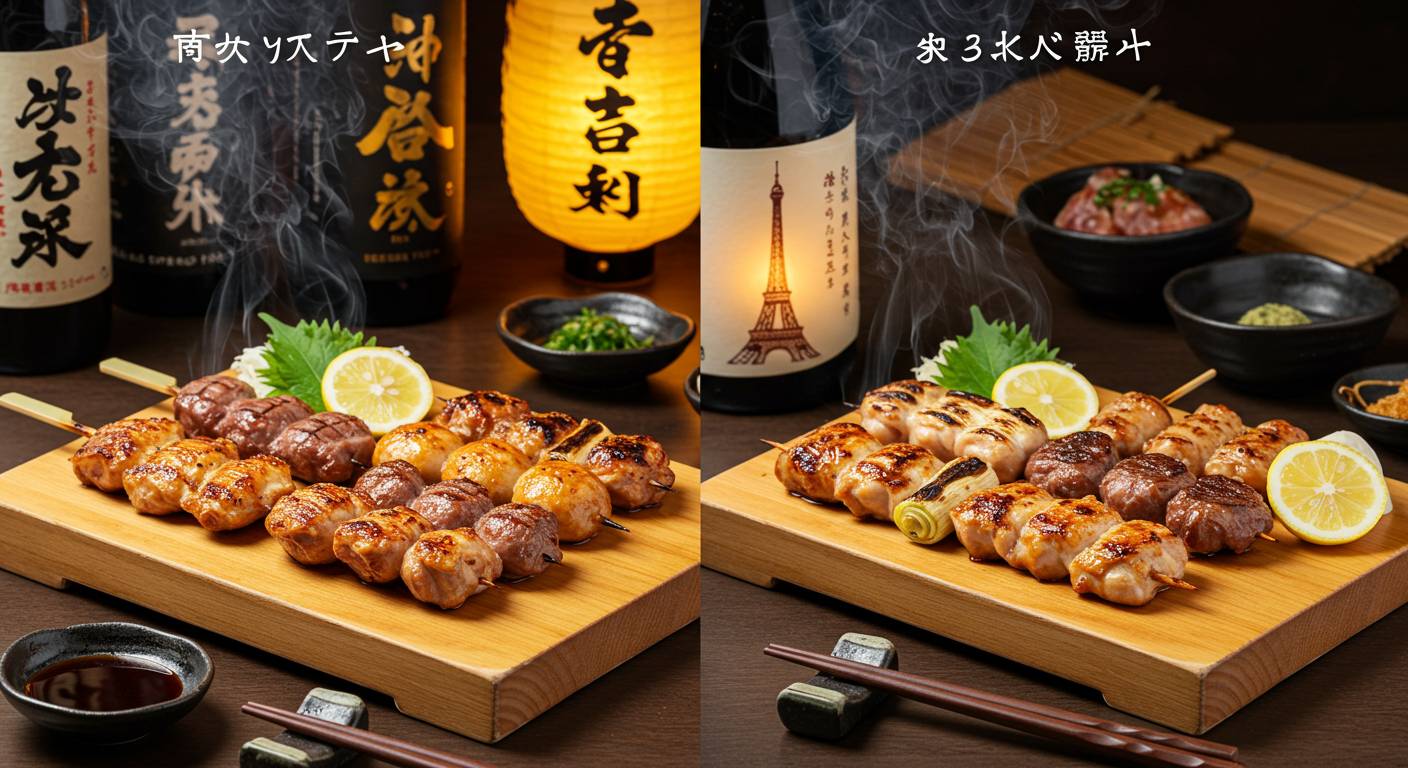
Hey foodies and Japanese cuisine lovers! Ever wondered why yakitori tastes so different depending on where you eat it in Japan? If you’ve ever bitten into these delicious grilled chicken skewers in both Tokyo and Osaka, you’ve probably noticed that something’s definitely unique about each style.
As someone who’s spent countless evenings hopping between smoky yakitori joints across Japan, I’m excited to take you on this flavorful journey exploring the distinctive regional differences that make yakitori such an incredible culinary experience.
Tokyo’s precision versus Osaka’s boldness? The subtle art of tare sauce variations? The secret techniques passed down through generations? We’re diving into all of it! Whether you’re planning your next trip to Japan or just dreaming about authentic Japanese street food from your couch, this guide will transport your taste buds across the most iconic yakitori scenes in the country.
Get ready to discover why locals debate so passionately about their regional yakitori styles and what makes each approach special. Trust me, after reading this, you’ll never look at those humble chicken skewers the same way again!
1. The Ultimate YAKITORI Battle: Tokyo vs Osaka – Which One Wins Your Taste Buds?
The savory aroma of chicken skewers grilling over binchotan charcoal is an unmistakable sensory experience that defines Japanese yakitori culture. While yakitori has become a global phenomenon, true aficionados know that regional differences create distinct culinary experiences across Japan, with Tokyo and Osaka representing two magnificent poles of this beloved cuisine.
Tokyo-style yakitori typically embraces simplicity and purity. The capital’s approach focuses on highlighting the natural flavors of each chicken part with minimal seasoning—often just high-quality salt (shio) to enhance the meat’s inherent qualities. Establishments like Torishin in Higashi-Azabu or Bird Land in Ginza exemplify this philosophy, where master chefs meticulously control grilling temperatures to achieve perfect caramelization while maintaining the meat’s juiciness.
In contrast, Osaka’s yakitori scene reflects the region’s nickname as “Japan’s kitchen” with bolder, more adventurous flavoring. Osaka chefs frequently opt for tare (sweet soy-based sauce) applications, creating a more robust, sweeter profile that coats the chicken with a glossy, caramelized finish. Legendary spots like Torisee in Umeda showcase this style, where skewers emerge with a deeper color and more pronounced umami.
The difference extends beyond seasonings to chicken parts preferences. Tokyo yakitori-ya proudly serve rare cuts like soriresu (chicken oysters) and hatsu (heart) with minimal intervention, while Osaka establishments might incorporate these into more complex preparations with additional ingredients or hearty glazes.
Dining customs differ too—Tokyo’s formal standing bars contrast with Osaka’s boisterous seated environments where yakitori is often enjoyed alongside other kushikatsu (fried skewers) and local specialties. This reflects the broader cultural contrast between Tokyo’s refined restraint and Osaka’s generous conviviality.
Which style reigns supreme? This remains eternally subjective. Tokyo’s approach appeals to purists seeking the essence of each ingredient, while Osaka satisfies those craving bold, immediate flavors. The true yakitori journey involves appreciating both traditions—understanding how each region’s history, available ingredients, and cultural attitudes have shaped these distinctive culinary expressions of a deceptively simple dish.
2. Secret YAKITORI Techniques Only Locals Know: From Tokyo Alleys to Osaka Streets
Venture beyond the tourist-packed yakitori establishments and you’ll discover a world of closely guarded techniques that vary dramatically between regions. In Tokyo’s narrow alleyways of Omoide Yokocho and Harmonica Yokocho, local masters have perfected the art of tare (sauce) application – never dipping the meat directly but rather using specialized brushes made from specific feathers that apply just the right amount of glaze without overwhelming the chicken’s natural flavors.
Tokyo’s yakitori chefs are particularly known for their “nijikan joseki” technique – a two-hour preheating of binchotan charcoal to reach the precise temperature that creates that signature smoky aroma without charring. Many establishments like Torikizoku maintain different heat zones on their grills, with seasoned chefs knowing exactly which parts require intense heat versus gentle cooking.
Meanwhile, in Osaka, the approach shifts noticeably. Osaka yakitori artisans typically employ the “mawashi-yaki” method – continuously rotating skewers to ensure even cooking while maintaining perfect juiciness. Unlike Tokyo’s precise, minimalist style, Osaka yakitori embraces bold flavors with specialized marination techniques often involving local citrus like sudachi or yuzu combined with their distinctive sweeter tare.
At beloved local institutions like Torishiki, chefs utilize “kiji-biki” – the art of hand-pulling chicken skin to achieve optimal texture before grilling. This meticulous technique creates that perfect balance between crispy exterior and tender meat that mass-produced yakitori simply cannot replicate.
One particularly fascinating regional difference lies in skewer selection. Tokyo establishments typically use bamboo skewers soaked in water to prevent burning, while many Osaka yakitori shops prefer metal skewers for specific cuts like tsukune (chicken meatballs) to ensure even heat distribution throughout these denser items.
These localized techniques represent generations of knowledge passed down through apprenticeship systems, with many master chefs spending decades perfecting these subtle methods before opening their own establishments. The true craft of yakitori lies not just in ingredient selection but in these carefully guarded techniques that transform simple skewered chicken into transcendent culinary experiences.
3. Top 5 Must-Try YAKITORI Styles Between Tokyo and Osaka – #3 Will Surprise You!
Exploring the yakitori scene between Tokyo and Osaka reveals fascinating regional differences that even many Japanese food enthusiasts aren’t aware of. Each area has developed distinctive styles that reflect local tastes and traditions. Here are the five most remarkable yakitori styles you absolutely must try when traveling through central Japan.
First on our list is Tokyo’s Omakase Yakitori. In the capital’s high-end establishments like Torishiki in Meguro or Bird Land in Ginza, chefs serve premium chicken parts in carefully curated sequences. The signature here is perfectly charred tsukune (chicken meatballs) with a soft-cooked egg yolk for dipping – a luxurious experience that showcases why Tokyo remains Japan’s culinary capital.
Second is Nagoya’s Tebasaki style. Unlike the standard single-skewer approach, Nagoya’s chicken wings are served whole and double-jointed, generously coated with a sweet-spicy glaze and sesame seeds. Yamachan, Nagoya’s famous chain, has popularized this style nationwide, but visiting the original location offers an authenticity that can’t be replicated.
The third spot – which surprises most visitors – belongs to Shizuoka’s Wasabi Yakitori. This coastal region between Tokyo and Osaka grows some of Japan’s finest wasabi, and local yakitori masters have brilliantly incorporated fresh-grated wasabi into their tare sauces. The subtle heat perfectly complements the smoky chicken, creating a flavor profile you simply won’t find elsewhere. Kushi Katsu in downtown Shizuoka perfects this regional specialty.
Fourth is Kyoto’s Heirloom Chicken Yakitori. The ancient capital’s refined culinary traditions extend to yakitori, where chefs use jidori (heritage breed chickens) raised on special diets. These skewers are typically seasoned minimally with only salt to highlight the exceptional meat quality. Sumibi Torito near Nishiki Market exemplifies this elegant approach.
Finally, we reach Osaka’s Bold Offal Yakitori. Osaka’s food culture embraces robust flavors and economical cuts, resulting in yakitori menus featuring expertly prepared sunagimo (gizzard), hatsu (heart), and liver. These are often seasoned with stronger, more pungent tare sauces than found elsewhere. For the ultimate experience, visit Yakitori Torachan in Umeda, where the chefs have been perfecting these specialties for generations.
Each of these regional styles tells a story about local preferences and ingredients. True yakitori connoisseurs will appreciate how these subtle differences create entirely different dining experiences across central Japan’s culinary landscape. Whether you prefer Tokyo’s precision, Nagoya’s boldness, Shizuoka’s surprising wasabi fusion, Kyoto’s refinement, or Osaka’s gutsy approach – the yakitori journey between these cities offers an education in Japanese regional cuisine that goes far beyond simple grilled chicken.
4. Why YAKITORI Tastes Different in Tokyo and Osaka: The Flavorful Truth Revealed
The distinct flavor profiles of yakitori in Tokyo and Osaka stem from deeply rooted culinary traditions that have evolved over generations. In Tokyo, yakitori typically features a balanced tare sauce with a sophisticated blend of soy sauce, mirin, sake, and sugar, creating a glossy, slightly sweet coating that complements rather than overwhelms the chicken’s natural flavor. Tokyo chefs often employ a more restrained approach to seasoning, allowing the quality of the chicken to shine through.
Osaka yakitori, by contrast, embraces a bolder flavor profile that aligns with the region’s “kuidaore” (eat until you drop) philosophy. The tare sauce in Osaka tends to be more robust, often incorporating additional ingredients like garlic, ginger, and sometimes even fruit juices for a complex, punchy flavor. This heartier approach reflects Osaka’s reputation as Japan’s kitchen, where flavors are designed to make an immediate impact.
The cooking method also varies significantly between regions. Tokyo yakitori establishments frequently use binchotan, a premium white charcoal that burns at consistent high temperatures with minimal smoke, allowing for precise cooking that seals in juices while imparting a clean, subtle smokiness. Osaka yakitori shops might use a variety of charcoals, sometimes favoring those that impart a more pronounced smoky character to complement their bolder sauces.
Another crucial difference lies in the chicken itself. Tokyo yakitori chefs often source specific premium breeds like Hinai-jidori or Nagoya Cochin, focusing on quality and provenance. Osaka chefs, while still quality-conscious, might place greater emphasis on how the chicken interacts with their more assertive seasonings, sometimes selecting birds that can stand up to stronger flavors.
The preparation techniques differ as well. Tokyo skewering tends to be more meticulous, with precise cuts designed to ensure even cooking and elegant presentation. Osaka yakitori might feature slightly larger cuts and sometimes incorporates vegetables or other ingredients between meat pieces to add textural contrast and additional flavor dimensions.
Local dining customs influence the experience too. In Tokyo, yakitori is often enjoyed as part of a sophisticated dining experience, paired with fine sake or wine in sleek, sometimes upscale establishments. Osaka yakitori thrives in livelier, more casual environments where the food serves as a centerpiece for social gatherings, often accompanied by beer or highballs in boisterous settings.
These regional differences aren’t merely about taste—they reflect broader cultural identities. Tokyo’s approach mirrors its reputation for refinement and precision, while Osaka’s style celebrates the region’s outgoing character and flavor-forward culinary tradition. For the yakitori enthusiast, understanding these distinctions adds another layer of appreciation to this seemingly simple but deeply nuanced Japanese culinary art.
5. From Tare to Shio: How YAKITORI Masters Change Their Game Between Tokyo and Osaka
The profound regional variations in yakitori extend far beyond chicken selection to the fundamental elements of flavor: the seasoning. Tokyo and Osaka represent two distinct approaches to yakitori artistry that reflect their broader culinary philosophies. In Tokyo, tare (sweet soy-based sauce) dominates the yakitori landscape, while Osaka embraces a more pronounced preference for shio (salt) seasoning.
Tokyo’s tare tradition features a complex, deeply layered sauce typically made from soy sauce, mirin, sake, and sugar, often enhanced with secret ingredients passed down through generations. At legendary establishments like Birdland in Ginza or Torishiki in Meguro, these tare recipes are closely guarded treasures, some aged for decades in special containers where each day’s remnants are added back to the master batch, creating extraordinarily complex flavor profiles.
Osaka yakitori masters, conversely, often let the quality of the chicken speak for itself through shio seasoning. High-end yakitori spots like Torisee in Umeda or Toriyoshi in Namba showcase this minimalist approach, allowing the natural umami of carefully selected chicken to shine. Osaka’s shio-style yakitori often involves more precision with salt application—sometimes using specialty salts from specific regions or blended with subtle additions like yuzu, matcha, or even locally produced charcoal powder.
The charcoal itself differs between regions too. Tokyo’s traditional yakitori establishments typically use Kishu binchotan, a premium white charcoal that burns at consistent high temperatures with minimal smoke. Osaka chefs might opt for Kochi’s Tosa binchotan or even mix charcoal types to achieve specific flavor profiles.
What’s particularly fascinating is how these regional styles are evolving. Modern yakitori masters increasingly cross-pollinate techniques, with Tokyo chefs incorporating more shio-style offerings and Osaka establishments exploring complex tare variations. This culinary dialogue between regions has created innovative approaches where seasonings are paired specifically to chicken cuts rather than adhering strictly to regional orthodoxy.
The temperature and grilling technique also varies subtly between regions. Tokyo’s approach tends toward higher heat and faster cooking, while Osaka’s style often embraces slightly lower temperatures and longer cooking times, especially for fattier cuts. These nuanced differences create distinct textural experiences that aficionados can immediately identify as characteristic of each region’s approach.
Understanding these regional variations adds another dimension to appreciating yakitori’s complexity. Whether you prefer the rich, umami-laden tare style of Tokyo or the clean, chicken-forward shio approach of Osaka, recognizing these distinctions enhances the culinary journey through Japan’s beloved skewered delicacy.
美味しさを全てのお客様へ 焼き師の熟年技とこだわりのお酒で唯一のひと時を
やきとり家 だいご匠 箱根強羅
四季折々の景観の居酒屋で焼き職人の絶品を味わえる
この記事へのコメントはありません。