

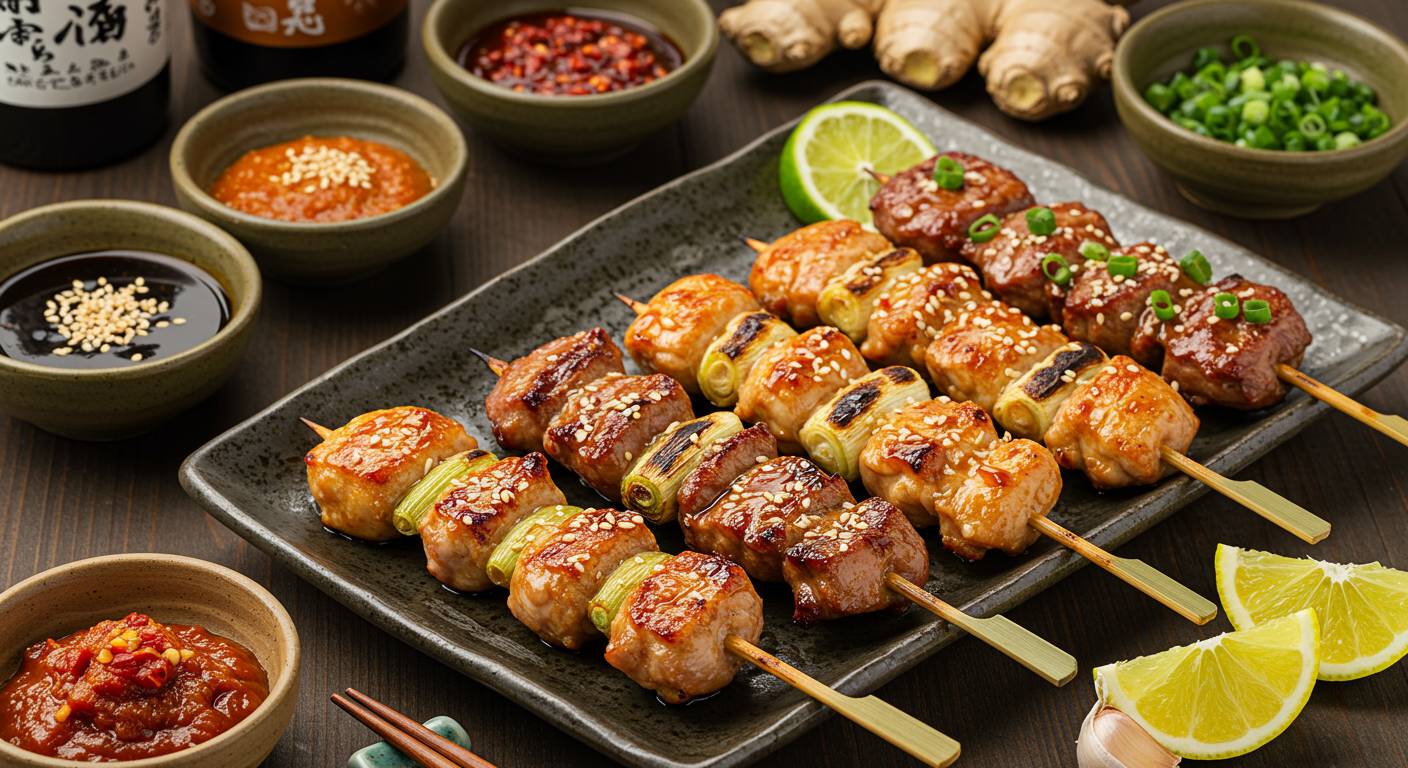
Hey there, yakitori enthusiasts and curious foodies! Have you ever bitten into a perfectly grilled yakitori skewer and wondered, “How on earth did they make this taste so incredible?” I’ve been on a mission to unlock the secrets behind those mouthwatering Japanese chicken skewers that keep us coming back for more.
As someone who’s spent countless hours perfecting the art of yakitori, I’m thrilled to share some game-changing marinade combinations that will transform your home cooking. Whether you’re a seasoned yakitori chef or just starting your Japanese culinary journey, these flavor profiles will take your skewers from good to absolutely unforgettable.
In this deep dive into yakitori marinades, I’ll reveal traditional techniques passed down through generations, alongside modern twists that create explosive flavor combinations. From simple 5-ingredient recipes using pantry staples to regional specialties rarely found outside Japan, we’re about to embark on a flavor adventure that will revolutionize your grilling sessions.
So fire up those coals, sharpen your skewering skills, and prepare to discover the magic behind creating yakitori that will have your friends and family convinced you’ve been secretly training with Japanese grill masters. Let’s unlock the art of yakitori marinade magic together!
1. Secret YAKITORI Marinade Recipe: 5 Ingredients You Already Have
Creating authentic yakitori at home doesn’t require specialty ingredients or complicated techniques. The secret to mouthwatering Japanese grilled chicken skewers lies in a simple marinade that transforms ordinary chicken into a culinary masterpiece. The best part? You likely have all five essential ingredients sitting in your pantry right now.
The foundation of any great yakitori marinade begins with soy sauce, which provides the perfect umami base. Add mirin (sweet rice wine) for complexity and a subtle sweetness that caramelizes beautifully on the grill. If you don’t have mirin, substitute with a tablespoon of honey or brown sugar mixed with a splash of rice vinegar. Sake adds depth and helps tenderize the meat, though dry white wine works in a pinch. Minced garlic and ginger complete the flavor profile, adding aromatic notes that make homemade yakitori irresistible.
To prepare this magic marinade, combine 1/4 cup soy sauce, 2 tablespoons mirin, 2 tablespoons sake, 1 tablespoon minced garlic, and 1 tablespoon grated fresh ginger. For optimal flavor penetration, marinate chicken thigh pieces (preferred over breast for juiciness) for at least 30 minutes, though overnight refrigeration yields even better results. This basic recipe serves as your gateway to yakitori mastery, offering a perfect balance of savory, sweet, and aromatic elements that professional chefs have perfected over generations in Japan’s most beloved yakitori restaurants.
When grilling, remember to baste your skewers with remaining marinade for that glossy, flavor-packed finish that distinguishes great yakitori. The natural sugars will caramelize, creating that distinctive charred exterior while keeping the interior tender and juicy.
2. Transform Your YAKITORI Game with These Unexpected Flavor Combinations
Traditional yakitori typically relies on the classic combination of salt or tare sauce, but truly innovative yakitori chefs know that experimentation with marinades can elevate this Japanese street food to extraordinary culinary heights. Here are some unexpected flavor combinations that will revolutionize your yakitori experience.
The sweet-heat combination of honey and gochujang creates a Korean-Japanese fusion that delivers an initial sweetness followed by a warming heat that perfectly complements chicken thighs. For a Mediterranean twist, try oregano, lemon zest, and olive oil on chicken breast skewers—the brightness cuts through the smoke beautifully.
Seafood yakitori benefits tremendously from unexpected marinades. Shrimp skewers transformed with coconut milk, lime juice, and lemongrass offer a Thai-inspired variation that guests will rave about. For scallop skewers, try a simple mix of white miso, mirin, and a touch of yuzu juice for an umami-rich experience.
Vegetable yakitori shouldn’t be overlooked in your flavor experimentation. Shiitake mushrooms marinated in aged balsamic vinegar, soy sauce, and thyme develop an incredible depth of flavor. Asparagus benefits from a coating of sesame oil, orange zest, and a sprinkle of togarashi for a nutty, citrusy, spicy combination.
For those willing to truly push boundaries, consider incorporating global flavors like chimichurri for South American flair, harissa paste for North African heat, or black garlic and truffle oil for luxurious umami depth. The skewer format of yakitori makes it the perfect canvas for culinary creativity.
Remember that marination times vary by ingredient—dense proteins like chicken thighs benefit from longer marination (4-6 hours), while delicate items like scallops need just 30 minutes to avoid becoming mushy. Always reserve some marinade for basting during grilling to intensify flavors and create a beautiful glaze.
3. The Ultimate Guide to Creating Mind-Blowing YAKITORI Marinades at Home
Creating restaurant-quality yakitori at home begins with mastering the art of marinades. While traditional salt-only yakitori has its charm, a well-crafted marinade can elevate your skewered chicken to extraordinary heights. This comprehensive guide will walk you through the essentials of crafting yakitori marinades that will impress even the most discerning palates.
The foundation of any great yakitori marinade starts with the perfect balance of five key elements: saltiness, sweetness, umami, acidity, and aromatics. For saltiness, quality soy sauce (preferably Japanese shoyu) serves as the base. Sweetness can come from mirin, honey, or brown sugar, which also helps create that coveted caramelization when grilled. Umami depth is achieved through ingredients like sake, dashi, or fish sauce. Acidity, often from rice vinegar or citrus juices, brightens flavors and tenderizes the meat. Finally, aromatics such as ginger, garlic, and green onions provide complexity.
For a classic yakitori tare (dipping sauce/marinade), combine 1 cup soy sauce, ½ cup mirin, ½ cup sake, and ¼ cup brown sugar in a saucepan. Add several slices of ginger, 3 crushed garlic cloves, and green onion ends. Simmer gently for 10-15 minutes until slightly thickened, then strain. This versatile base can be customized endlessly.
Regional variations offer exciting possibilities. For Kyushu-style yakitori, add a tablespoon of black sesame paste and a hint of chili oil to your marinade. For a Nagoya-inspired twist, incorporate red miso paste and a touch of hatcho miso for remarkable depth. Okinawan-style marinades might include awamori (Okinawan rice spirit) and a hint of kokuto (Okinawan brown sugar).
Marination timing matters significantly. For delicate parts like chicken breast, 30 minutes is sufficient to impart flavor without affecting texture. Thighs and legs benefit from 2-4 hours, while tougher cuts like gizzards can marinate overnight. Always marinate in the refrigerator in glass or food-grade plastic containers.
The double-dipping technique used by professional yakitori chefs involves a light initial marinade, followed by grilling, then brushing with reduced marinade between turns, and finally a final glaze just before serving. This layering of flavors creates remarkable depth and that signature yakitori lacquer.
For health-conscious adaptations, reduce sodium by substituting coconut aminos for some of the soy sauce. Cut sugar content by using rice malt syrup or monk fruit sweetener. These substitutions maintain flavor integrity while accommodating dietary preferences.
Remember that marinade ingredients should complement the specific chicken parts. Delicate breast meat pairs beautifully with lighter, citrus-infused marinades, while rich thigh meat can stand up to bolder, more robust flavor profiles. Offal cuts benefit from stronger marinades with extra aromatics to balance their distinctive character.
Master these principles, and you’ll create yakitori marinades that transform simple skewered chicken into a transcendent culinary experience—right in your own kitchen.
4. Japanese Chefs Reveal Their Private YAKITORI Marinade Techniques
Behind the scenes at Japan’s most acclaimed yakitori establishments, master chefs have perfected marinade techniques that transform simple skewered chicken into unforgettable culinary experiences. These closely guarded secrets are rarely shared outside professional kitchens, but several renowned chefs have graciously revealed their methods.
Chef Yoshiteru Ikegawa of Torishiki in Tokyo emphasizes the importance of timing. “The perfect tare (sauce) is meaningless without proper marination timing,” he explains. His technique involves a double-dipping method—first a brief 30-second soak followed by a second dip after partial grilling. This creates layers of flavor that develop as the skewers cook.
At Birdland in Ginza, Chef Toshihiro Wada uses an aged shoyu base that has been continuously replenished for over two decades. “The depth comes from koji fermentation,” Wada notes. His marinade incorporates house-made mirin and specific ratios of sake to sugar that vary by chicken part. For thigh meat, he adds a touch of yuzu zest—unexpected but brilliant.
Chef Atsushi Tanaka of Morimoto Kyoto reveals that temperature control is critical. “We warm our marinade to exactly 40°C before using it on room-temperature chicken,” he says. This precise temperature opens the meat’s pores, allowing deeper flavor penetration without beginning the cooking process.
Perhaps most surprising is Chef Kunio Tokuoka’s technique at Kitcho. He incorporates dashi made from aged katsuobushi into his yakitori marinade, creating umami depth that perfectly complements chicken’s natural flavors. “The secret is balance—salt, sweet, umami, and a whisper of acid,” Tokuoka shares.
These professional techniques demonstrate why yakitori in Japan transcends simple grilled chicken. By controlling variables like temperature, timing, fermentation, and layering of flavors, these chefs create marinades that have earned international acclaim and, in some cases, Michelin stars.
5. Try These Regional YAKITORI Marinades That Will Blow Your Mind
Japanese yakitori isn’t just a national dish—it’s a canvas for regional flavor expressions that vary dramatically across the country. Each prefecture puts its unique spin on marinades, creating a rich tapestry of taste experiences that many yakitori enthusiasts never discover. Let’s explore some mind-blowing regional yakitori marinades that will transform your grilling game forever.
In Kyushu, particularly Fukuoka, yakitori takes on a bold personality with their yuzu kosho-based marinade. This fiery paste combines green chili peppers, yuzu citrus zest, and salt, creating an explosive flavor profile with heat and brightness that perfectly complements chicken thighs and tsukune (chicken meatballs). The citrus cuts through the richness while the chili provides a slow-building warmth.
Travel northeast to Nagoya, and you’ll encounter their distinctive hatcho miso marinade. Using century-old fermentation techniques, this robust, dark miso creates a deeply savory, almost coffee-like richness that caramelizes beautifully over binchotan charcoal. Locals typically pair this intense marinade with chicken wings or hearts for an unforgettable umami experience.
The coastal regions of Hokkaido offer a completely different approach with their konbu shoyu blend. This marinade incorporates seaweed-infused soy sauce with fresh ginger and sake, resulting in a delicate oceanic flavor that enhances rather than overwhelms the natural taste of premium jidori chicken. The subtle brininess works particularly well with chicken breast skewers.
In Okinawa, awamori (local rice spirit) combined with kokuto (Okinawan black sugar) creates a sweet-savory glaze that’s painted onto skewers during the final moments of grilling. This technique produces a magnificent lacquered finish with complex caramel notes that have made this style increasingly popular at high-end yakitori establishments like Torishiki in Tokyo.
Perhaps most surprising is Tohoku’s apple-infused tare, where local apple vinegar is blended with white miso and a touch of seven-spice shichimi. This unexpected combination delivers a fruity tang that brightens fatty chicken cuts like thigh and skin, creating a perfect balance that showcases the region’s famous apple orchards.
These regional marinades demonstrate yakitori’s incredible versatility beyond the standard salt or tare options. By incorporating these authentic local techniques into your cooking repertoire, you’ll experience yakitori as it’s meant to be enjoyed—diverse, nuanced, and deeply connected to Japan’s culinary geography. Each skewer tells a story of place, tradition, and innovation that continues to evolve while honoring its roots.
この記事へのコメントはありません。